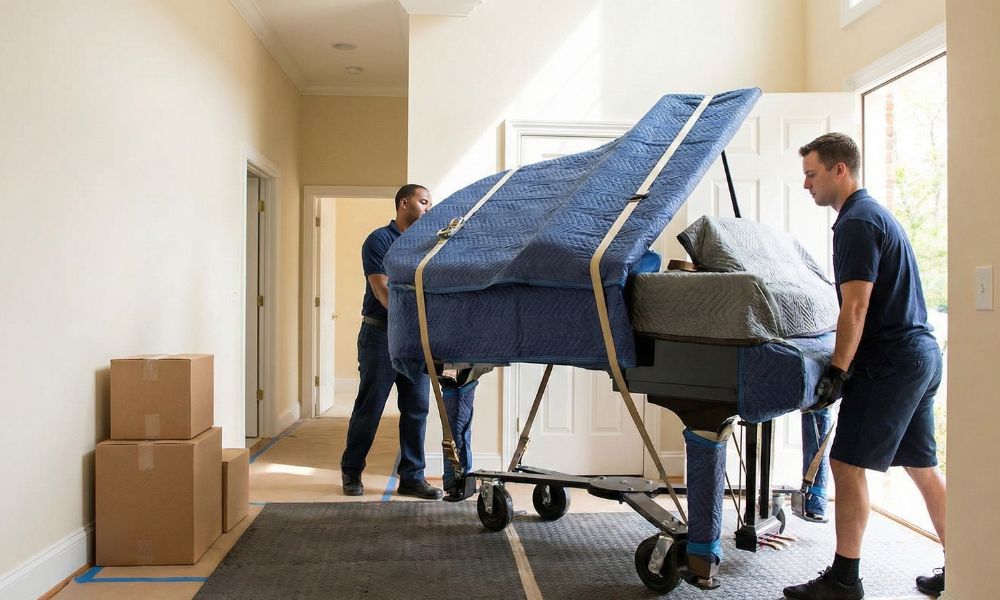
Moving a piano is one of the most challenging tasks you'll face during a relocation. Whether you own an upright, baby grand, or concert grand piano, these magnificent instruments require special care, proper equipment, and careful planning to ensure they arrive at your new home safely and in tune.
At River Hills Moving, we've helped countless families successfully relocate their cherished pianos. In this comprehensive guide, we'll walk you through everything you need to know about moving a piano safely.
Why Piano Moving Is So Difficult
Before attempting to move a piano yourself, it's essential to understand what makes these instruments so challenging to relocate.
Weight and Construction
Pianos are deceptively heavy due to their internal cast-iron harp that holds the strings together. Here's what you can expect:
- Spinet pianos: 300-400 pounds
- Console pianos: 350-450 pounds
- Studio uprights: 400-500 pounds
- Full upright pianos: 500-800 pounds
- Baby grand pianos: 500-600 pounds
- Medium grand pianos: 600-800 pounds
- Concert grand pianos: 900-1,500 pounds
Delicate Internal Mechanisms
Despite their weight, pianos contain intricate internal components that can be easily damaged during a move. The soundboard, strings, hammers, and action mechanisms are all sensitive to jarring movements, tilting, and environmental changes.
Awkward Shape and Size
Pianos aren't just heavy; they're bulky and difficult to maneuver through doorways, around corners, and up or down stairs. Their weight distribution varies by type: upright pianos carry most of the weight at the top and have relatively fragile legs.
Essential Equipment for Moving a Piano
Having the right tools is non-negotiable when moving a piano. Attempting to move one without proper equipment puts both your piano and your safety at risk.
Must-Have Equipment:
- Piano Dolly: A specialized four-wheel dolly designed to support the weight and shape of a piano. Standard furniture dollies won't suffice.
- Moving Blankets: Multiple thick, padded blankets to protect the piano's finish from scratches, dents, and impacts.
- Ratchet Straps: Heavy-duty straps to secure the piano to the dolly and inside the moving truck.
- Lifting Straps: Professional-grade lifting straps that distribute weight evenly and reduce strain on your back.
- Furniture Sliders: To help maneuver the piano across floors without scratching.
- Tape Measure: For measuring the piano, doorways, hallways, and staircases.
- Tools: Screwdrivers and wrenches for disassembling piano legs and pedals (especially for grand pianos).
- Protective Floor Covering: Cardboard or old rugs to create safe pathways and prevent floor damage.
- Work Gloves: To improve grip and protect your hands.
Optional but Helpful:
- Piano skid board (for stairs)
- Corner protectors
- Moving truck with a ramp
- Hand truck
- Additional padding materials
Step-by-Step Guide: How to Move a Piano Safely
Step 1: Measure Everything
Before you begin, take precise measurements of:
- Your piano's height, width, and depth
- All doorways in both your current and new home
- Hallways and corridors
- Stairways (including overhead clearance)
- Elevator dimensions (if applicable)
- The moving truck capacity
Measure doorways diagonally from corner to corner to determine if the piano can pass through at an angle. This step prevents frustrating situations where the piano becomes stuck or damaged from being forced through tight spaces.
Step 2: Gather Your Moving Team
Enlist help from at least four to five people depending on your piano's size. You'll need:
- Two people to lift and support each end
- One person to guide and steady the dolly
- Extra helpers for navigating stairs or difficult passages
Choose helpers who are physically fit and have experience lifting heavy objects. Ensure everyone wears:
- Closed-toe, sturdy shoes with good traction
- Comfortable clothing that allows free movement
- Work gloves for better grip
Step 3: Prepare Your Piano
For Upright Pianos:
- Close and secure the keyboard lid with tape
- Lock or secure the top lid
- Wrap the pedals with moving blankets and secure with tape
- Wrap the entire piano in multiple layers of moving blankets
- Secure blankets with ratchet straps or moving rubber bands
For Grand Pianos:
Grand pianos require partial disassembly:
- Close and lock the keyboard lid
- Remove the music stand
- Lower and secure the top lid
- Have helpers support the piano while you remove the legs (one at a time)
- Carefully lower the piano onto a piano board or padded surface
- Wrap all components separately in moving blankets
- Package legs and pedals securely
Step 4: Clear and Prepare Your Path
Before moving the piano:
- Remove all obstacles from hallways and doorways
- Take down doors if necessary to create more clearance
- Lay down protective cardboard or rugs along the entire path
- Secure floor coverings with tape to prevent slipping
- Keep children and pets in a separate area for safety
Step 5: Lift the Piano onto the Dolly
This is one of the most critical and dangerous steps:
- Position the piano dolly next to the piano
- Have your team gather around the piano in position
- Using proper lifting technique (bend your knees, keep your back straight, lift with your legs), everyone lifts in unison
- One person slides the dolly underneath while others maintain the lift
- Gently lower the piano onto the dolly
- Immediately secure it with ratchet straps
Important Safety Reminder: Never attempt to tilt an upright piano backward or lay it on its side during this process, as this can damage the internal mechanisms.
Step 6: Navigate Through Your Home
Move slowly and deliberately:
- Have one person guide from the front
- Others should stabilize from the sides and rear
- Take your time through doorways and hallways, avoiding sharp angles
- For stairs, position one person at the top guiding and two or more steadying from below
- Never rush, patience prevents accidents
Step 7: Load Into the Moving Truck
- Use a ramp to roll the piano carefully into the truck
- Position the piano against the back wall of the truck for stability
- The piano should be one of the first items loaded
- Secure it firmly with ratchet straps to prevent any movement during transit
- Add extra blankets around it as cushioning
- Never stack items on top of or against the piano
Step 8: Transport Carefully
During transportation:
- Drive slowly and avoid sudden stops or sharp turns
- Take the smoothest routes possible
- Avoid potholes and rough roads
- Allow extra time for careful driving
Step 9: Unload and Position in New Home
Follow the loading process in reverse:
- Carefully wheel the piano down the ramp
- Navigate to its designated location in your new home
- Position upright pianos against an interior wall, away from:
- Direct sunlight
- Air vents or HVAC registers
- Windows and drafty areas
- Exterior walls (if possible)
Step 10: Reassemble and Let It Settle
For grand pianos, carefully reattach all legs and pedals with your team's assistance. For all pianos, allow four to six weeks for the piano to acclimate to its new environment before scheduling a tuning. Temperature and humidity changes affect the internal components and tuning stability.
Piano Moving Safety Tips
Protect Yourself:
- Always lift with your legs, not your back
- Communicate constantly with your team
- Take breaks when needed, fatigue leads to accidents
- Don't attempt to "save" a falling piano, let it go and get out of the way
Protect Your Piano:
- Never drag a piano across floors
- Keep the piano upright whenever possible
- Avoid tilting beyond what's absolutely necessary
- Don't use the legs or pedals as handles
Protect Your Property:
- Watch for doorframes, walls, and corners
- Use corner protectors on tight passages
- Cover banisters and railings
- Protect floors with proper coverings
When to Hire Professional Piano Movers
While this guide provides the steps for moving a piano yourself, there are situations where hiring professionals is the wiser choice:
You Should Hire Professionals If:
- Your piano is a valuable antique or concert-quality instrument
- You need to navigate multiple flights of stairs
- Doorways are extremely tight or require removing windows
- You're moving long-distance
- You have health limitations or lack sufficient helpers
- You're moving a full-size grand piano
- Your piano needs storage during the move
Why Choose River Hills Moving for Your Piano Move
At River Hills Moving, piano relocation is one of our specialties. Our professional piano movers utilize custom equipment for top-tier safety, and our seasoned team has successfully moved pianos throughout the Texas Hill Country.
We understand that your piano isn't just furniture, it's a cherished instrument with both monetary and sentimental value. Our team treats every piano move with the care and expertise it deserves.
The Cost of Piano Moving: DIY vs. Professional
DIY Piano Moving Costs:
- Equipment rental (dolly, straps, blankets): $100-200
- Moving truck rental: $150-300
- Helper costs (food, drinks, potential favors): $50-100
- Risk of injury: Potentially thousands in medical bills
- Risk of piano damage: Hundreds to thousands in repairs
- Risk of property damage: Varies
Professional Piano Moving Costs:
- Local move (under 50 miles): $200-500
- Long-distance move: $500-1,500+
- Includes: Equipment, expertise, insurance, peace of mind
When you factor in the risks and hidden costs of DIY moving, professional piano movers often provide better value while eliminating stress and danger.
Frequently Asked Questions About Moving a Piano
How much does a piano weigh?
Piano weights range from 300 pounds for small uprights to over 1,500 pounds for concert grands. Most home pianos weigh between 400-800 pounds.
Can I move a piano on its side?
Upright pianos should remain upright during moves when possible. Grand pianos are actually transported on their side after proper disassembly, but this requires professional expertise.
How many people do I need to move a piano?
Minimum of four to five people for most pianos, with more required for grand pianos or difficult moves involving stairs.
Will moving damage my piano?
Properly moved pianos typically sustain minimal damage, though tuning is always required after a move due to environmental changes and internal shifting.
How soon can I play my piano after moving?
You can play it immediately, but wait 4-6 weeks before having it professionally tuned to allow it to adjust to the new environment.
Can I move a piano in a pickup truck?
Not recommended. Pianos need enclosed transportation to protect them from weather, road debris, and temperature fluctuations.
Ready to Move Your Piano?
Moving a piano is a complex task that requires preparation, equipment, and expertise. While it's possible to move a piano yourself following this guide, many homeowners find that hiring professional piano movers provides peace of mind and protects their valuable instrument from damage.
At River Hills Moving, we're here to help make your piano move stress-free. Our experienced team has successfully moved pianos of all types throughout the Texas Hill Country, and we'd be honored to help with yours.
Contact River Hills Moving today for a free quote on your piano move. Let us handle the heavy lifting so you can focus on making beautiful music in your new home.


.png)


.png)