There is a specific sound that haunts everyone who has ever moved house.
It is that distinct, tragic clinking noise you hear when you lift a cardboard box. It sounds like loose change rattling in a jar, but deep down, you know it is actually the sound of your favorite wine glasses grinding against each other. It is the sound of a kitchen disaster waiting to be unveiled.
The kitchen is widely considered the most difficult room to pack. It is heavy, cluttered, and filled with hundreds of fragile objects that do not stack easily.
Whether it is your grandmother’s fine china or just the IKEA plates you eat dinner on every Tuesday, opening a box to find shards of ceramic is a heartbreak you want to avoid.
The secret to packing dishes isn't just "use more bubble wrap." It is actually about physics.
Here is how to pack your kitchen like a professional, ensuring that everything arrives at your new home in the same number of pieces it left in.
Most people assume that the dishes broke because the movers dropped the box. While that can happen, the real enemy is much more subtle: vibration.
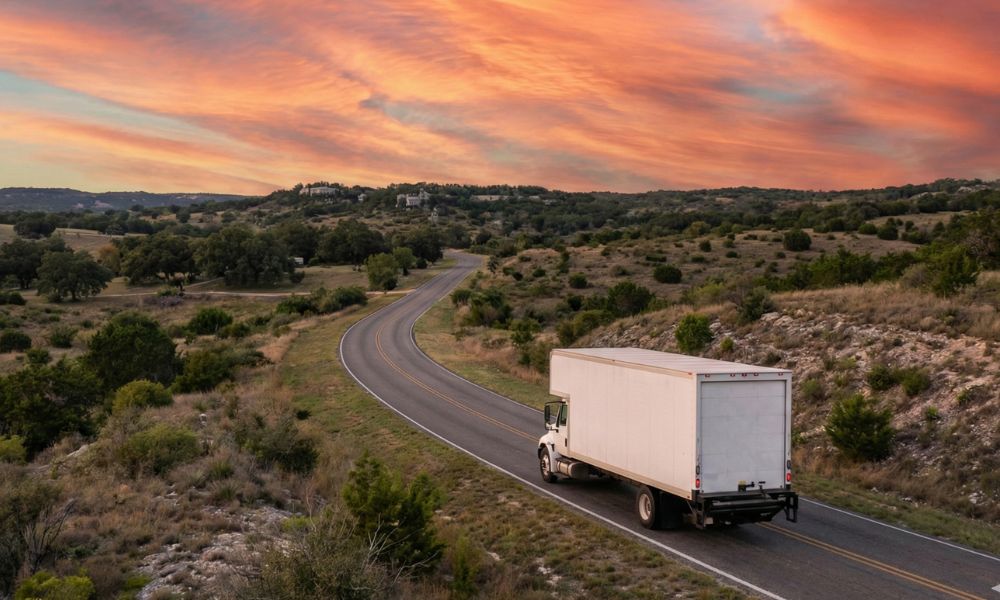
During a move, especially on the winding, sometimes gravel roads of the Texas Hill Country, a truck is constantly vibrating. If two glass items are touching, that vibration turns into friction. Over a 30-minute drive, that friction creates stress fractures and eventually, cracks.
Therefore, the goal of packing dishes isn't just to wrap them; it is to suspend them. You want every plate, bowl, and glass to be "floating" in a sea of paper, never touching the cardboard walls or each other.
We all love saving money, but the kitchen is not the place to use free boxes you found behind the liquor store. Those boxes are often thin, weakened by moisture, or smell like old beer.
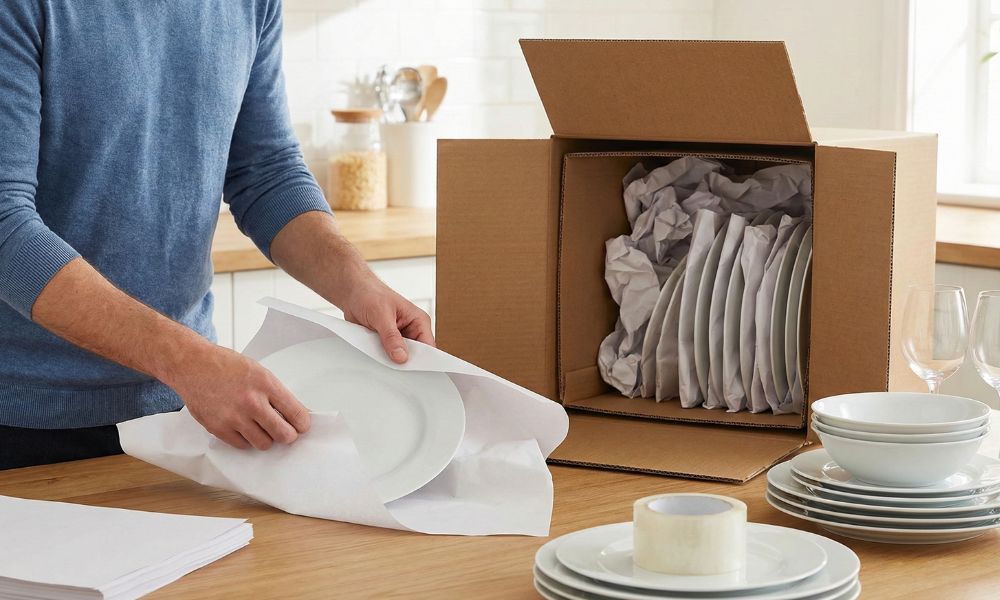
For dishes, you need Dish Barrels. These are specific moving boxes constructed with double-walled cardboard. They are twice as thick as a standard box, designed to absorb impact.
Next, you need Packing Paper (Newsprint). Do not use actual newspapers. The ink from yesterday’s headlines will rub off onto your white plates, and you will spend the first week in your new home scrubbing ink off your china. You need clean, unprinted white newsprint, and you need a lot of it. A typical kitchen requires a 25lb bundle of paper. If you think you have enough, buy one more bundle.
Before you put a single plate in the box, you need to build a foundation.
Take 10 to 15 sheets of packing paper, crumple them up into loose balls, and line the bottom of your dish barrel. You want a 3-inch layer of dense, crumpled paper at the bottom.
This is your crumple zone. If the box is set down a little too hard on the concrete, this layer acts like a car's shock absorbers. It takes the hit so your plates don't have to.
This is the most common mistake DIY movers make, and it's why most plates break. Never stack plates flat like pancakes.
When you stack plates flat, the bottom plate bears the weight of all the plates above it. If the truck hits a pothole on a ranch road, the vertical pressure from the impact instantly snaps the bottom plates.
Instead, you must pack plates vertically, standing on their edges like vinyl records in a crate.
You now have a bundle of three plates, individually cushioned by paper layers. Place this bundle into the box standing up on its edge. Repeat until the bottom row of the box is full. The plates should be snug, but not forced.
Wine glasses are the divas of the kitchen. They are top-heavy, fragile, and have a structural weak point: the stem.
To pack them, you need to support the void. Take a sheet of paper, crumple it slightly, and stuff it gently inside the goblet of the glass. This provides internal structure. Next, wrap paper around the stem to make it as thick as the goblet. You want to turn the wine glass's hourglass shape into a cylinder.
Once wrapped, place these in the top layer of your box. Never put heavy plates on top of glasses. If you are using a dish barrel, plates go on the bottom, bowls in the middle, and glasses on top.
Once your box is filled, you need to fill every remaining gap. If there is a corner with empty space, stuff a ball of paper in it. If there is a gap between the top of the dishes and the lid of the box, add another 3-inch "crumple zone" of paper on top.
Before you tape it shut, do the Shake Test.
Gently lift the box and give it a little wiggle. Do you hear anything?
Finally, a box of dishes is heavy. A fully loaded dish barrel can weigh 50 pounds. When you tape it shut, take a thick marker and write "FRAGILE - KITCHEN - THIS SIDE UP" on the top and on the sides.
Why the sides? Because when boxes are stacked six feet high in the truck, your movers can’t see the top of the box. Side labeling ensures they know exactly what they are handling.
Packing a kitchen properly takes time. It is not uncommon for a standard family kitchen to take 8-10 hours to pack correctly using these methods. It is tedious, repetitive work, and your hands will be dry from handling the paper by the end.
If reading about "crumple zones" and "friction vibration" sounds like a headache, remember that you have options. At RiverHills Moving, our packing teams are trained in this "kitchen physics." We bring the dish barrels, the paper, and the expertise to pack your entire kitchen in a fraction of the time it would take you to do it yourself.
Whether you DIY it or hire us, treating your dishes with respect ensures that the first meal in your new home is served on a plate, not a puzzle.


Audrey Williams is the co-owner of RiverHills Moving, alongside her husband, Jackson Williams. With four years of marketing experience, Audrey specializes in promoting their company and building its presence. She is passionate about working for their family business and finds great fulfillment in seeing its growth positively impact others. Audrey’s dedication and drive come from her commitment to helping their business thrive and serve the community.
.png)


.png)