verified Request a move-specific estimate and review the written scope before booking.
Warehouse & Light Industrial

Contractor & Trade Shop Moving in San Antonio

Put the tool crib, workbenches, and material racks where your crews need them at the new shop; your team handles the vehicles.

(830) 329-7272
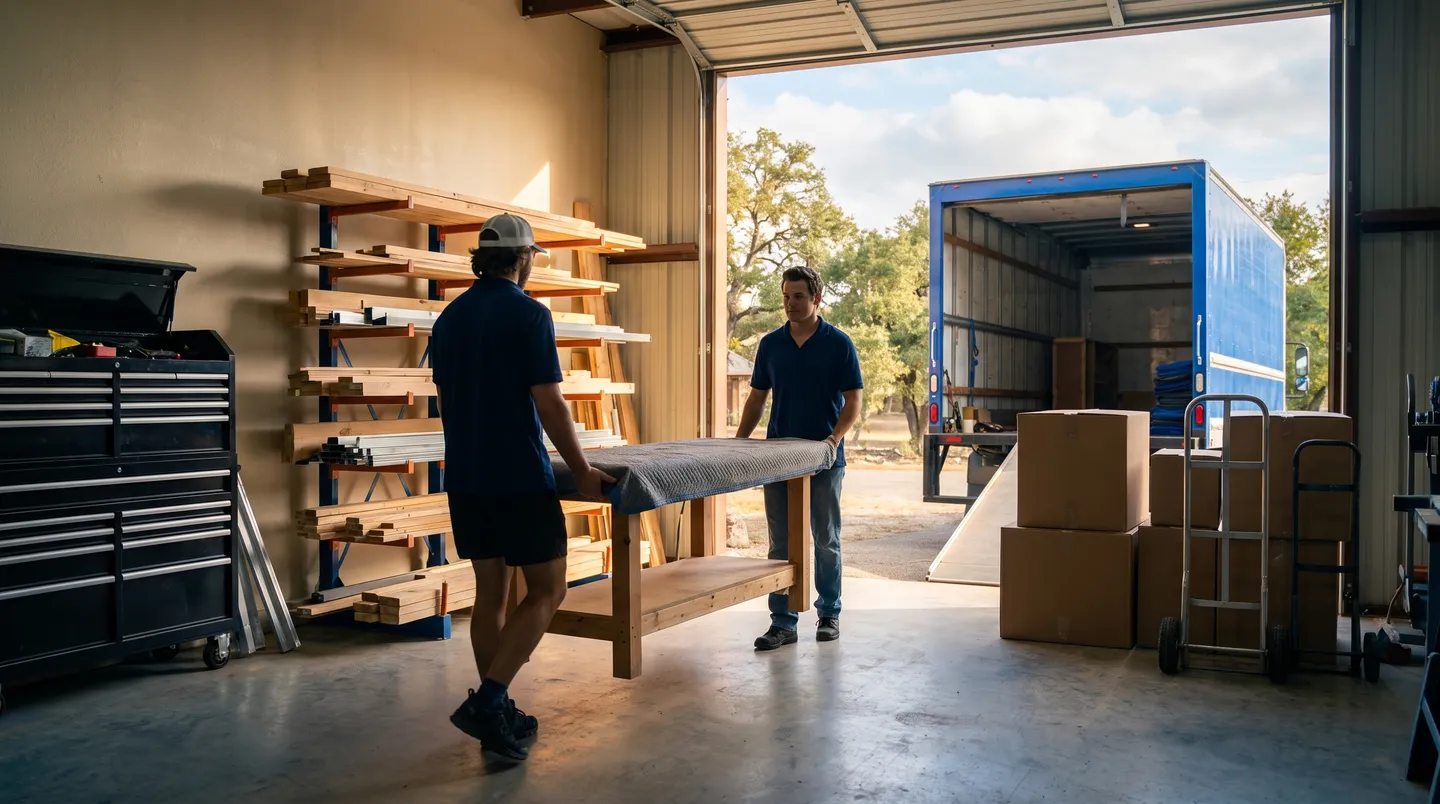
Contractor & Trade Shop moving in San Antonio: moving crew at work
  • Licensed & Insured USDOT 3561425 · MC-1196218
  • 5.0 ★ Rated 500+ Google Reviews
  • San Antonio & Hill Country Kerrville · Boerne · Fredericksburg

Start your free contractor & trade shop move quote

verified For estimate purposes only credit_card_off No credit card required

Planning a Contractor & Trade Shop Move

The tool crib is the busiest room in a contractor's shop, and the last one crews want closed. A drill kit assigned to a field crew, fittings at the bench, and spare parts on a material rack may need different destinations. Your shop manager decides what stays available for current jobs and what can be packed. That decision separates the daily issue area from stock going to the new shop.

We can move freestanding benches, tool cabinets, labeled bins, portable racks, and boxed materials after your team sorts them. Mark the new issue counter, bench positions, and long-stock area on a floor plan. We label movable pieces to those places so one load does not block the next. Your crews control issued tools and job kits until they release them.

Your drivers move the vehicle fleet, including anything that must remain aboard for field work. Our shop move covers agreed contents and movable fixtures. Air compressors, welders, and other connected shop equipment wait for the vendor or licensed trade who services them.

Who usually signs off
Trade business owner or shop manager who approves the new work-area layout and releases tools for packing
Timing that works
Schedule around dispatch and material pickup; an evening or weekend window may help when field crews still need tools from the old shop.

What typically moves

  • Tool-crib cabinets and issue counter Your manager identifies issued and spare tools; cleared drawers and labeled cabinet sections travel to their assigned crib positions.
  • Freestanding assembly and repair benches Bench-top parts are boxed by station, and loose vises or accessories are identified before each movable bench is padded.
  • Portable material racks and stock Pipe, conduit, trim, or other long pieces are grouped by type and length; your team confirms which racks are freestanding.
  • Small-parts bins and fastener drawers Bins remain in their original sequence where practical, with drawer contents secured and destination labels facing out.
  • Gang boxes and rolling tool chests Your supervisor identifies the owner or crew for each unit and clears loose items that cannot travel safely inside.
  • Job-board supplies and plan tables Your staff takes active job information; movable tables, plan holders, and boxed office supplies go to the assigned work area.

Access and scheduling

Dispatch sets the calendar for a trade shop. Tell us when crews pick up tools, suppliers drop material, and the issue door must remain open. Your manager can release the crib in sections while a marked issue area stays active. We plan loads from that release list and the new floor plan, then confirm who can identify a misplaced tool at delivery.

We check the yard gate, moving-truck parking, shop-door height, and the route from material racks to loading. Long stock needs room to turn; a narrow door changes how it is bundled. If either property shares a loading lane, the landlord's hours and vehicle rules shape the schedule. Ask about a Certificate of Insurance when the building requires one. Your drivers schedule fleet transfers apart from our truck so both operations have room.


Protection and handling

Small parts disappear when a crib is emptied without a map. Your lead marks cabinet sections and shelves; we carry those references onto totes and movable cabinets. Loose fasteners go into closed, labeled containers. Power tools travel in cases or with separate protection; batteries and chargers stay grouped by the sets your crew identifies. We pad bench edges and keep removable accessories with their stations.

We verify that a material rack is freestanding, empty it as planned, and protect its contact points. Your team identifies job-allocated stock so it does not merge with general inventory. At the new shop we place racks and bins to your layout, leaving aisles clear for your staff to restock and check quantities. The appropriate trade or vendor prepares fixed shop equipment and connected bench services; that provider handles setup and testing.

Who does what

Some of this job belongs to other trades. The written plan names each one.

Fixed shop equipment and connected bench services
Your equipment vendor or licensed trade prepares, moves, reconnects, and tests those items. We plan the movable benches and stock around their work.
Vehicle fleet and contents kept aboard
Your drivers transfer trucks and vans and decide what remains assigned to each vehicle. We move only shop contents you release to our crew.
Tool assignments and material counts
Your shop manager records issued tools, job allocations, and stock quantities. We track the labeled handling units and flag unclear destinations.

Not part of our work

  • Driving or transporting your work trucks, vans, trailers, or equipment carried in them; your drivers control the fleet transfer.
  • Preparing, installing, or testing fixed shop equipment or connected bench services; arrange that work with the relevant vendor or licensed trade.
  • Deciding which tools belong to a field crew or reconciling material quantities; your shop manager owns those records.

Around San Antonio and the Hill Country

Trade shops around San Antonio often sit on yard lots along Loop 410, Pleasanton Road, and I-35, or on acreage toward Helotes, Bulverde, and Boerne, where a caliche yard and a gate set the truck route. Many crews start early in summer, so the crib must open at dawn; we move it after the last crew leaves.

The crew that shows up

Loaded hand dolly at the truck rampRiverHills Moving crew member at workLabeled moving boxes staged for loading

Contractor & Trade Shop Moving FAQs

Another question? Call (830) 329-7272.

How can our field crews keep getting tools while the crib moves?

Your manager identifies tools and consumables needed for dispatch, then keeps that issue area open. We can move released cabinet sections first and leave the active area for a later load. Give each section a destination on the new floor plan so staff can issue from the new crib as it is set up.

Will you move the trucks and vans parked at our shop?

Your drivers handle the vehicle fleet and decide what stays aboard. We plan separate access so parked vehicles and our truck do not block the same door or yard lane. If tools or materials inside a vehicle should join the shop move, your team unloads and identifies those items before releasing them to us.

What should we do with long pipe, conduit, or trim on the racks?

Have your lead separate job-allocated pieces from general stock and mark each group by type, length, and destination. We check the carry route and bundle released material without mixing groups. Your team confirms counts and decides how to restock after the racks are placed at the new shop.

Can the new tool crib follow our existing drawer and bin order?

Yes, if your manager marks the current order and supplies the destination layout. We label drawers, bins, and cabinets with source and destination positions, then place them in sequence where the room allows. Your staff checks the arrangement and resolves any changes in the issue process or tool assignments.

Plan your business move

Tell us both addresses, the building rules you know about, and the dates you cannot move. We will send back a written plan and estimate.

Call (830) 329-7272

Mon–Fri 8 AM–6 PM · Sat 9 AM–4 PM · Sun Closed

Call Now call 830-329-7272