verified Request a move-specific estimate and review the written scope before booking.
Property, Institutional & Government

Courthouse Administration Moving in San Antonio

Move clerk counters and administrative work areas on the county's schedule, with crew entry and restricted rooms controlled by courthouse staff.

(830) 329-7272
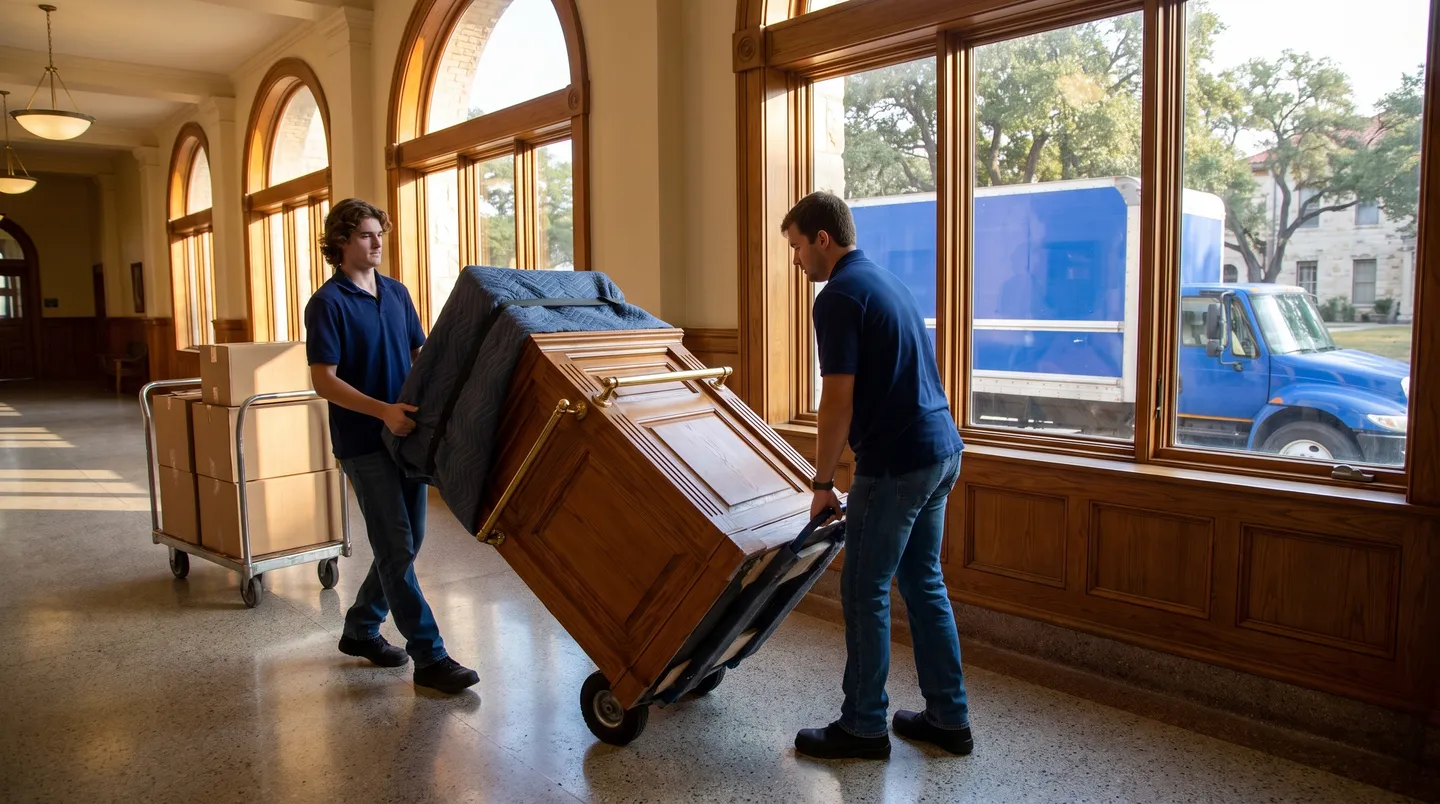
Courthouse Administration moving in San Antonio: moving crew at work
  • Licensed & Insured USDOT 3561425 · MC-1196218
  • 5.0 ★ Rated 500+ Google Reviews
  • San Antonio & Hill Country Kerrville · Boerne · Fredericksburg

Start your free courthouse administration move quote

verified For estimate purposes only credit_card_off No credit card required

Planning a Courthouse Administration Move

In a courthouse office, the public counter sets every other date. The clerk decides when filings stop at the old window, where staff will receive them next, and which desks must be ready before the counter opens again. County facilities controls the loading route. Courthouse security sets the entry requirements for each crew member.

Our scope can include freestanding clerk counters, docket shelves, staff desks, waiting-area seating, and cartons the clerk's team has packed and labeled. The office supplies a destination plan that distinguishes intake, cashier, records, and back-office areas. We mark each movable piece to that plan and place it where the clerk wants it. Court exhibits, evidence, and secured property stay with county-designated personnel; they are outside this office move. We do not need to see the contents of a closed case carton to place it in the right room.

Who usually signs off
County facilities lead and clerk's office administrator, with courthouse security approving crew entry
Timing that works
The clerk sets counter closure and reopening windows around filing deadlines and court calendars; facilities confirms when each office can be released.

What typically moves

  • Freestanding clerk window modules Movable counter sections and transaction ledges are tagged by window position; facilities identifies any section attached to the building.
  • Docket reference shelves Freestanding shelving is labeled by destination wall and bay after the clerk's team removes the materials it wants to control.
  • Intake and cashier workstations Desks, pedestals, chairs, and desk-level equipment move by assigned station; county staff retain cash and payment materials.
  • Clerk-prepared case cartons Closed cartons travel by outside room and shelf labels; clerk staff choose contents and handle any filing order inside them.
  • Public queue fixtures and seating Portable stanchions, bench units, and chairs are placed according to the receiving office's public path.
  • Administrative conference tables Removable legs and hardware stay with each table so the county's room plan can be followed at delivery.

Access and scheduling

The county tells us which door a crew may use, what identification to submit, whether entry requires an escort, and which rooms are off limits. We can provide crew names and requested details for the county's process. Courthouse staff decide whether each person may enter and when the loading path is available. If the route crosses a public lobby or screening point, facilities chooses the approved cart path and staging area before moving day.

The clerk's counter calendar drives the sequence. Ask the clerk to identify filing deadlines, public notice needs, and any temporary intake location; the office makes those service decisions. The clerk can request an evening or weekend window when county access and elevator hours allow. We can provide a Certificate of Insurance on request.


Protection and handling

Before anything leaves a clerk office, its lead marks the pieces released for moving and gives us a receiving room map. We pad counter edges, protect desk corners, and keep removed furniture hardware with its original piece.

Clerk staff decide which case materials may travel, close the cartons, and retain any detailed inventory. We carry those cartons by their outside destination labels without opening them. Intake and cashier stations move as numbered sets so county IT can bring each window back up in the order the clerk reopens them. The county's fixture contractor or licensed trade handles attached counter sections and building connections. Courthouse personnel retain control of exhibits, evidence, secured property, and access to restricted rooms throughout the move.

Who does what

Some of this job belongs to other trades. The written plan names each one.

Crew entry and room access
County security defines the screening, identification, and escort process and decides who may enter. We submit the requested crew details and follow the access route it approves.
Case materials and counter service
Clerk staff select and close case cartons, retain their detailed list, and decide when the public counter closes and reopens. We move released office items by destination label.
Attached fixtures and office technology
The county's contractor handles attached counters and building connections; county IT handles network setup and testing. We move released freestanding pieces and desk-level equipment.

Not part of our work

  • Evidence, exhibits, and secured property remain with county-designated personnel and are outside this administrative office scope.
  • County staff decide who may enter restricted areas and supply any required escort; our crew follows their approved route.
  • Opening case cartons, deciding retention, or setting the clerk's filing order remains with the clerk's office.

Around San Antonio and the Hill Country

Bexar County's courts and clerk offices are concentrated downtown around the historic courthouse and the justice center, where public entrances run through security screening and service access is separate. Weekday parking near Main Plaza is tight. In Kendall County at Boerne and Kerr County at Kerrville, the courthouse may be an older building with narrow stairs and limited elevator access, so the county contact confirms which door and hours the crew may use.

The crew that shows up

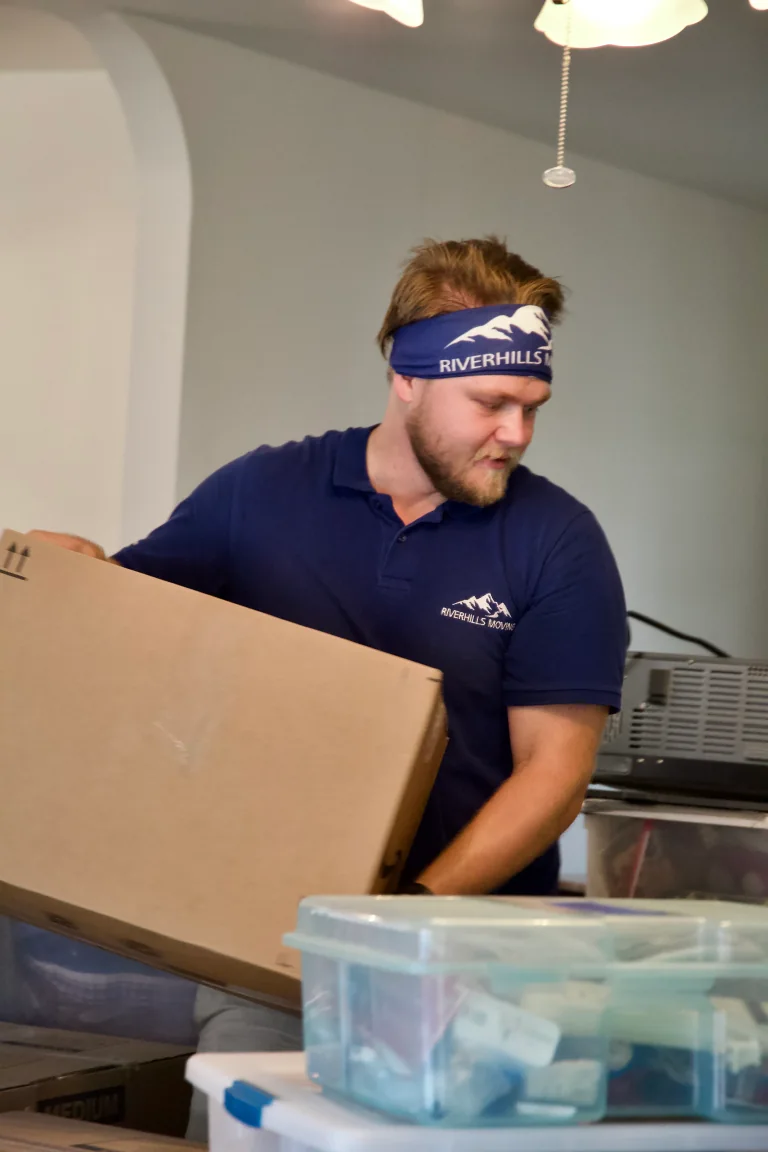
Loaded hand dolly at the truck rampRiverHills Moving crew member at workLabeled moving boxes staged for loading

Courthouse Administration Moving FAQs

Another question? Call (830) 329-7272.

Who decides whether a moving crew can pass courthouse screening?

Courthouse security sets the requirements and makes the entry decision. Ask its contact what crew information, identification, arrival time, and escort arrangement it needs. We can send the requested details and plan the load around the approved path. The county resolves any denied entry.

How do we keep the clerk's filing window available during the move?

Your clerk's office chooses the last intake time at the old window and the first service point at the destination. It also handles public notices. We can sequence movable window sections, workstations, queue fixtures, and labeled supply cartons around that plan. County IT checks equipment and layout before service.

Will your crew handle exhibits or evidence stored near the clerk's office?

Those materials stay under the control of county-designated personnel. The county marks excluded rooms and directs our route around them. Our inventory covers released administrative pieces and closed cartons prepared by clerk staff. The county lead classifies any unlisted item.

What labels should the clerk's staff put on closed case cartons?

Give each carton an outside destination room and shelf or bay code that matches the receiving plan. The clerk retains its case list and filing order. We use the outside code to load and place the closed cartons. If the receiving shelf layout changes, have the clerk's lead update the placement map before delivery.

Plan your business move

Tell us both addresses, the building rules you know about, and the dates you cannot move. We will send back a written plan and estimate.

Call (830) 329-7272

Mon–Fri 8 AM–6 PM · Sat 9 AM–4 PM · Sun Closed

Call Now call 830-329-7272