

verified Request a move-specific estimate and review the written scope before booking.
Commercial Service

Files and Records Moving in San Antonio

Decide which cabinets can travel with contents, measure the rest by linear feet, and give every shelf run a destination sequence.

(830) 329-7272
Files & Records Moving moving in San Antonio: moving crew at work
  • Licensed & Insured USDOT 3561425 · MC-1196218
  • 5.0 ★ Rated 500+ Google Reviews
  • San Antonio & Hill Country Kerrville · Boerne · Fredericksburg

Start your free commercial move quote

verified For estimate purposes only credit_card_off No credit card required

How We Plan Files & Records Moving

At every file cabinet the first question is the same: can it travel with its contents, or must the files come out? That choice changes the carton count, the weight on the carry route, and the order in which shelves can be rebuilt. Your records lead tells us which runs are going to the new address. We measure the occupied linear feet, count cabinets separately, and compare their dimensions with the doors, elevator, and destination layout.

Some cabinets may be suitable to move with contents secured; others need to be emptied because of their construction, weight, stairs, or building limits. For boxed runs, your team assigns a source range and destination range. Our crew uses those sequence labels to load groups together and place closed cartons beside the right shelving. Staff can then restore the files in their intended order without searching across a mixed pile. Retention decisions remain with you, and any records selected for shredding go to the vendor you appoint.

Who usually signs off
Records administrator or facilities lead, with the client department approving file selection and shelf order
Timing that works
Choose a window after your records team finishes selection and labeling; evening or weekend access can be discussed with building management.

What typically moves

  • Vertical file cabinets We assess drawer load, frame condition, stairs, and elevator limits before agreeing whether contents stay secured inside or go into cartons.
  • Lateral file cabinets Wide drawers add weight and can shift; the packing plan records which units travel emptied and where their files belong.
  • Boxed shelf runs Cartons carry a source run, position in that run, and destination shelf code supplied by your records lead.
  • Mobile file pedestals Each pedestal is linked to its receiving department or desk; loose contents are packed when the unit cannot travel loaded.
  • Freestanding archive shelving Shelves and uprights are labeled by bay so your approved destination arrangement can be set out before cartons arrive.
  • Plan drawers and document cases Oversize paper remains flat in closed drawers or cases selected by your team; we check the carrying route before moving them.

Access and scheduling

Send us the occupied shelf footage by room or bay, the cabinet count, and a drawing of the receiving file area. A cabinet that fits the doorway may still exceed an elevator load limit when full, so we ask for the building's cart and elevator rules before settling the full-versus-boxed list.

At a managed San Antonio office building, your facilities contact reserves the loading area and freight elevator and confirms whether management needs a Certificate of Insurance. We ask where closed cartons may wait without blocking another tenant or an exit. Your records lead should finish the keep, move, and shred decisions before the crew arrives; otherwise the cartons cannot be sequenced reliably. Ask about a weekend or evening slot once both buildings confirm access.
Protection and handling

Before lifting a cabinet, we inspect its drawers, fasteners, and base and compare the planned load with the route. Where a cabinet travels loaded under the agreed plan, drawers are secured and the unit is wrapped and kept upright. If its weight or condition calls for emptying, files are boxed by shelf position while your staff directs how they are grouped. A carton label needs a location code and sequence, not a person's name or a description of the contents.

We protect door edges and floors on the cart route, keep cartons from different runs in separate groups, and place them at the designated receiving bays. Your staff can check the shelf sequence before opening cartons. We move closed cartons as presented; we do not read files to resolve an unclear label. If a label lacks a destination or a cabinet's condition differs from the plan, we stop that item for your records lead to decide whether it should be relabeled, emptied, or left for a later trip.

Who does what

Some of this job belongs to other trades. The written plan names each one.

Retention and destination decisions
Your records lead decides what moves, what remains, and the destination shelf order. Our crew measures, labels to that map, and carries the released cabinets and cartons.
Records selected for shredding
Your team identifies those records and arranges pickup with its shred vendor. The vendor handles collection and destruction; our crew keeps that material separate from the move load.

Not part of our work

  • Choosing a retention period, reviewing file contents, or deciding which records should be destroyed; your organization makes those decisions.
  • Collecting or destroying records marked for shredding; your appointed shred vendor handles that work.

Around San Antonio and the Hill Country

In San Antonio office towers near downtown or the South Texas Medical Center, a freight elevator's load limit can determine whether a cabinet travels full. Ground-level suites in Stone Oak and along Loop 1604 have different door and parking routes, but shelf order still needs a plan. The same cabinet and linear-foot questions apply when records move between San Antonio and Boerne, Kerrville, or other Hill Country offices.

The crew that shows up

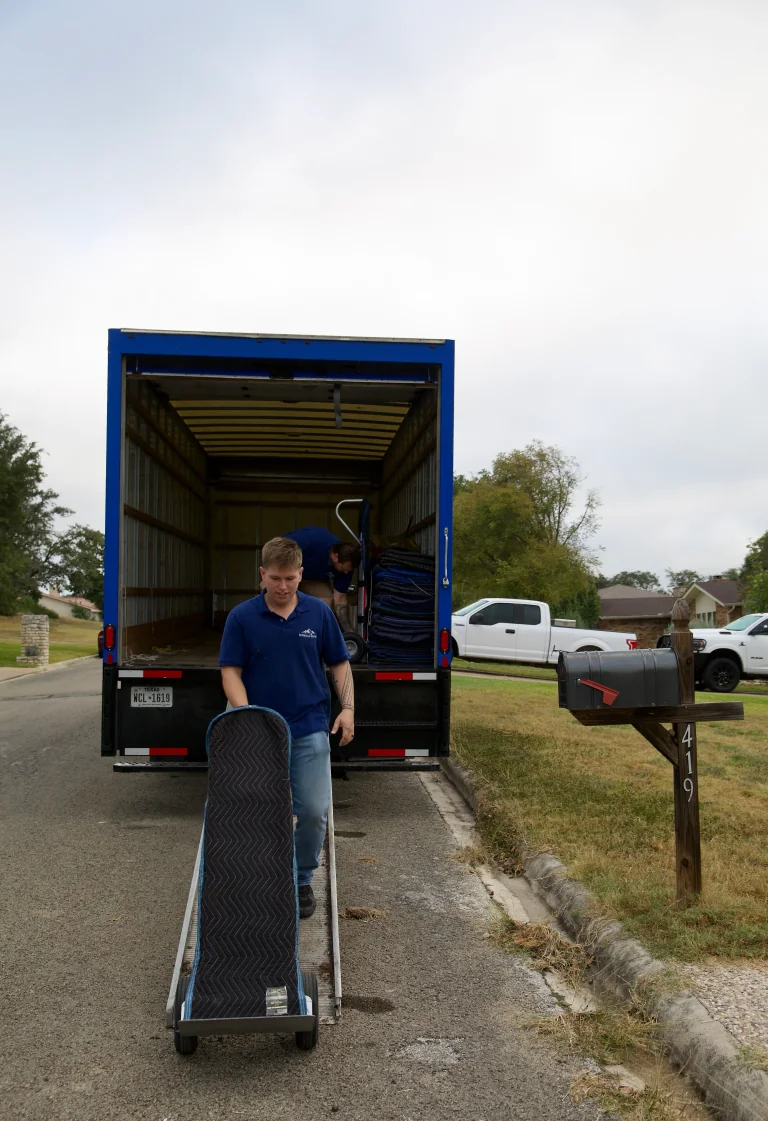
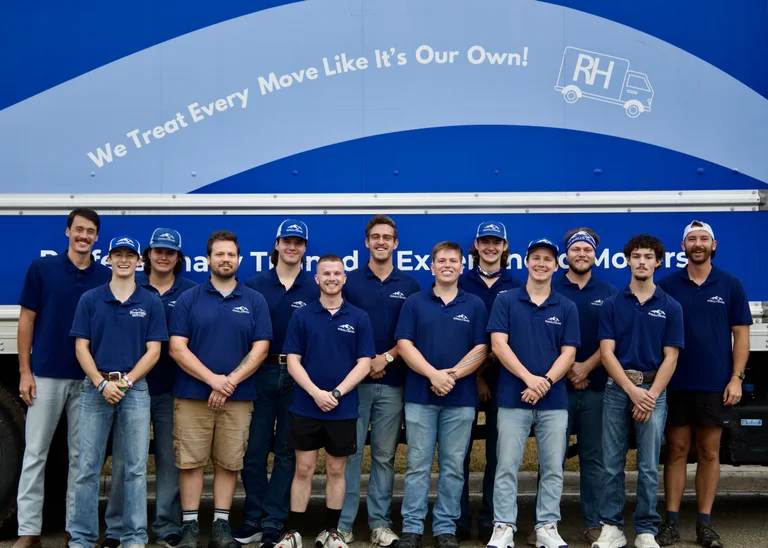
Loaded hand dolly at the truck rampRiverHills Moving crew member at workLabeled moving boxes staged for loading

Files & Records Moving FAQs

Another question? Call (830) 329-7272.

Can our file cabinets move with the records still inside?

Possibly. We check the cabinet's construction and condition, drawer load, stairs, elevator limits, and turns along the route before agreeing on a loaded move. Cabinets that are too heavy or unstable for the route are emptied. Your records lead chooses how the files are grouped, and we mark the resulting cartons to return to the assigned cabinet or shelf.

How should we measure a file room before requesting a move plan?

Measure the occupied length of each shelf run in linear feet, then list cabinet types and any partly filled sections separately. Note the source room and the intended destination bay for each run. This gives us a way to discuss carton volume and placement without needing to inspect the records themselves. Share any building load restrictions at the same time.

What labels will keep our boxed records in shelf order?

Use a code for the source room and shelf run, a number showing each carton's position in that run, and a code for its destination bay. Keep your detailed contents list with your own staff. We can group cartons by those outside labels and set them beside their assigned shelves, while your records lead checks the order before unpacking.

Where should cartons marked for shredding go on move day?

Have your records lead identify them before loading and place them in a separate area for the shred vendor you have arranged. Your organization decides what is eligible for destruction and confirms the vendor's pickup process. Our moving list includes only cabinets and cartons authorized for the new address, so a destruction pile does not enter the placement sequence.

Plan your business move

Tell us both addresses, the building rules you know about, and the dates you cannot move. We will send back a written plan and estimate.

Call (830) 329-7272

Mon–Fri 8 AM–6 PM · Sat 9 AM–4 PM · Sun Closed

Call Now call 830-329-7272