verified Request a move-specific estimate and review the written scope before booking.
Warehouse & Light Industrial

Film Production Studio Moving in San Antonio

Scenic pieces travel by set, cases by department, and props by inventory location, with your production team controlling the next stage setup.

(830) 329-7272
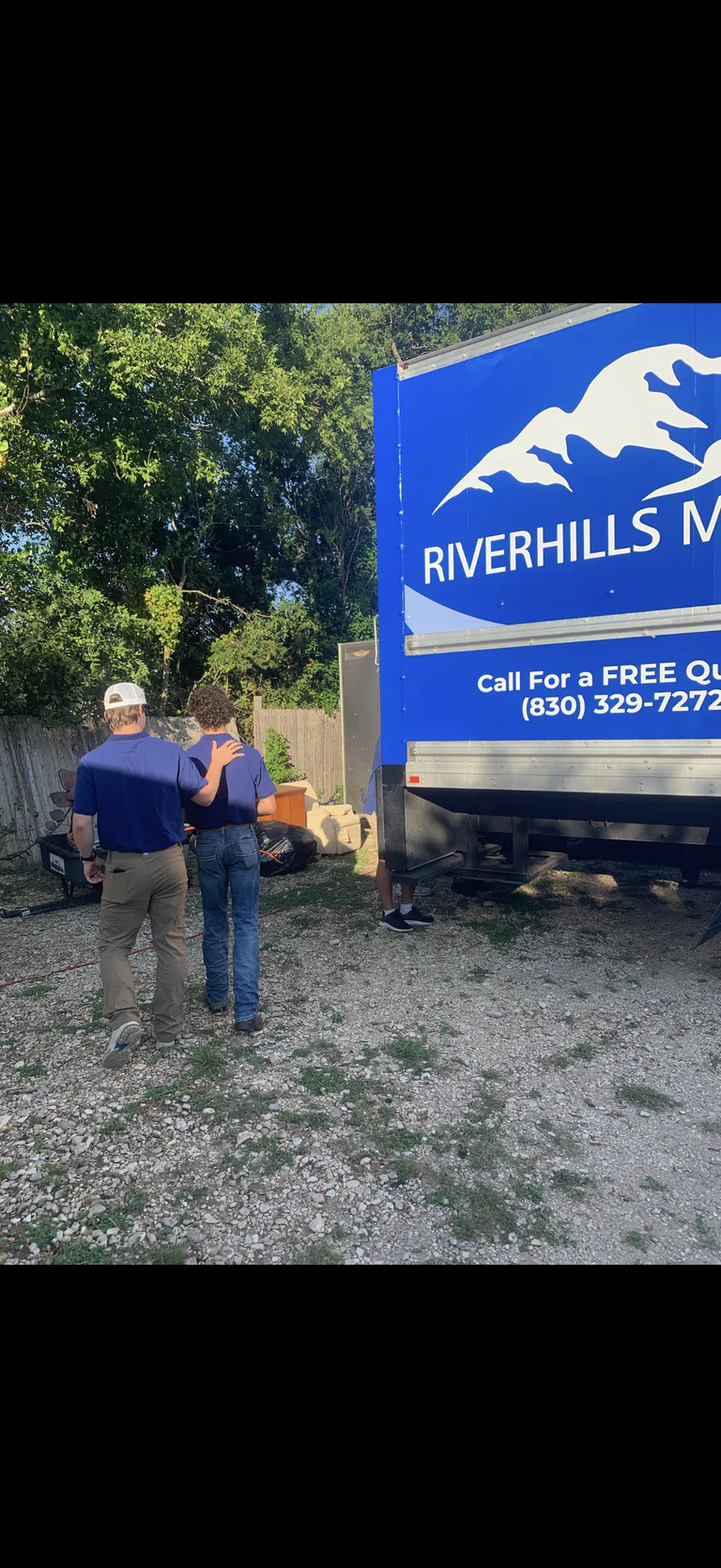
Film Production Studio moving in San Antonio: moving crew at work
  • Licensed & Insured USDOT 3561425 · MC-1196218
  • 5.0 ★ Rated 500+ Google Reviews
  • San Antonio & Hill Country Kerrville · Boerne · Fredericksburg

Start your free film production studio move quote

verified For estimate purposes only credit_card_off No credit card required

Planning a Film Production Studio Move

Stage floors are rarely clear on the day a studio decides to move. Scenic flats may still form a room, grip carts may be reserved for the last shot, and a prop shelf may hold pieces assigned to several scenes. Your production manager decides when each set can be struck and each department releases its gear. We turn those decisions into a loading plan for a San Antonio or Hill Country studio.

Your scenic lead marks the flats, doors, platforms, and trim that will be reused. We identify each loose section by set and destination bay, keeping removable hardware with it. Lighting and grip leads close and mark their cases before we carry them. Your props team supplies inventory locations and separates pieces needed for the next setup from those headed to shelving. A case label tells us where to place a load; your department decides what belongs inside.

At the destination, the stage needs room for set assembly, case staging, and a clear path for the next scene. We walk those paths with your team before loading.

Who usually signs off
Studio operations manager or production manager, with department heads approving equipment and props lists
Timing that works
Plan around the final shoot, scenic strike, equipment returns, and the first stage setup at the new address; ask about evening or weekend access.

What typically moves

  • Scenic flats, doors, and loose trim Reusable sections are marked by set and wall position; removable braces and fasteners stay with the matching section.
  • Portable set platforms and steps Your scenic lead identifies loose modules and the next stage position before we pad edges and load them.
  • Closed lighting road cases Your lighting department packs fixtures and accessories, then marks each closed case for its destination stage or equipment bay.
  • Grip cases and rolling carts Stands, clamps, flags, and small fittings remain in department-prepared cases or secured carts with visible destination labels.
  • Prop bins and freestanding prop shelving Bins follow the props team's shelf and scene references; empty shelving is labeled for its new inventory position.
  • Wardrobe racks and labeled garment cases Your wardrobe lead closes garment cases and identifies racks that can leave after the final costume pull.

Access and scheduling

The call sheet and stage calendar determine when a load can leave. Each department head marks final use, strike period, and release contact. We can move retired scenery and inactive props first, then collect cases and set sections after the last scene and department packing. Your team separates rental returns from goods going to the new studio.

At both addresses, we check scenery door height, dock turns, ramp grade, cart paths, and shared loading lanes. The new stage should have marked landing zones for scenic sections, lighting cases, grip carts, and props inventory. If a landlord controls the dock or requests a Certificate of Insurance, send the requirements and access hours. Ask about evening or weekend work around shoots and other tenants.
Protection and handling

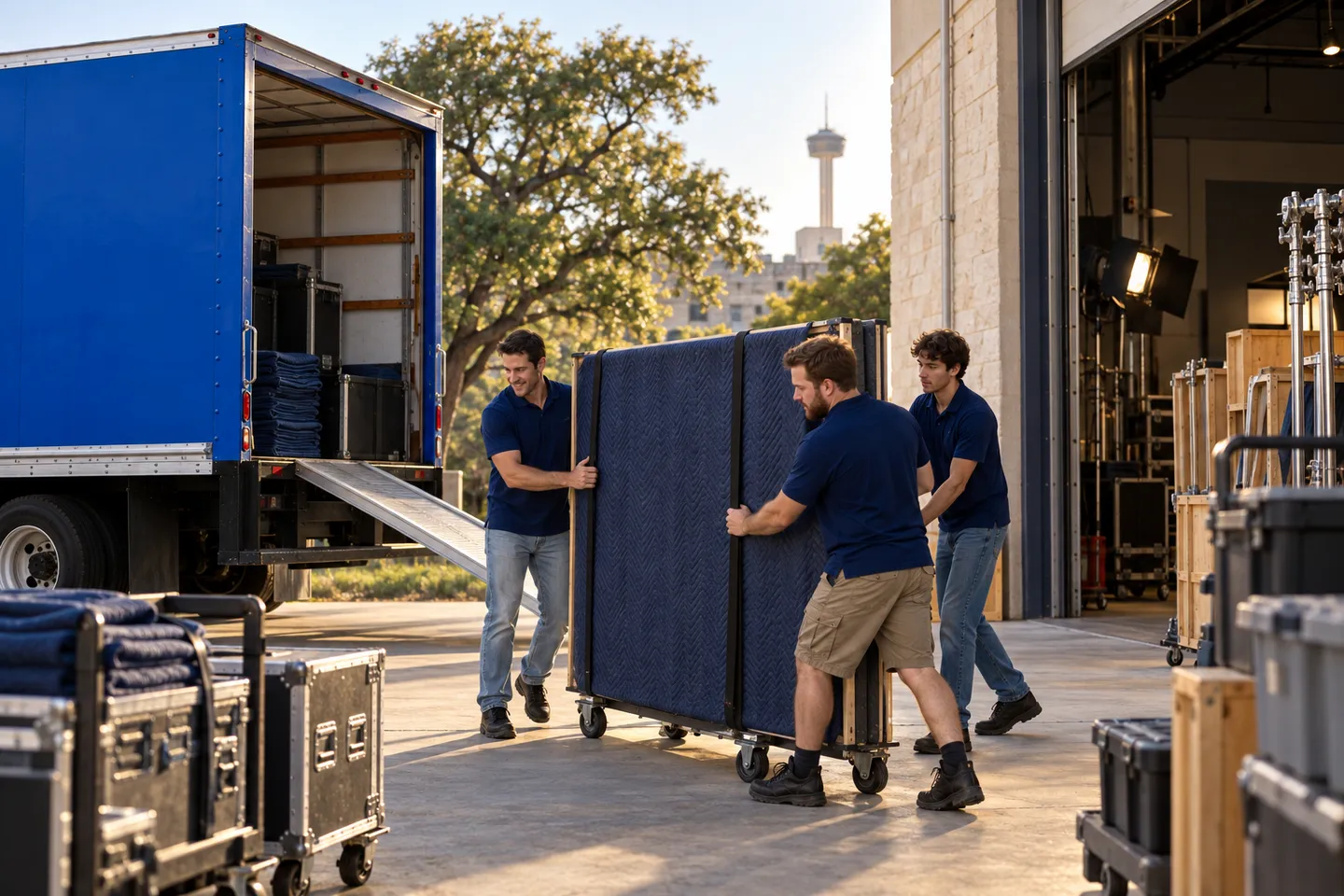
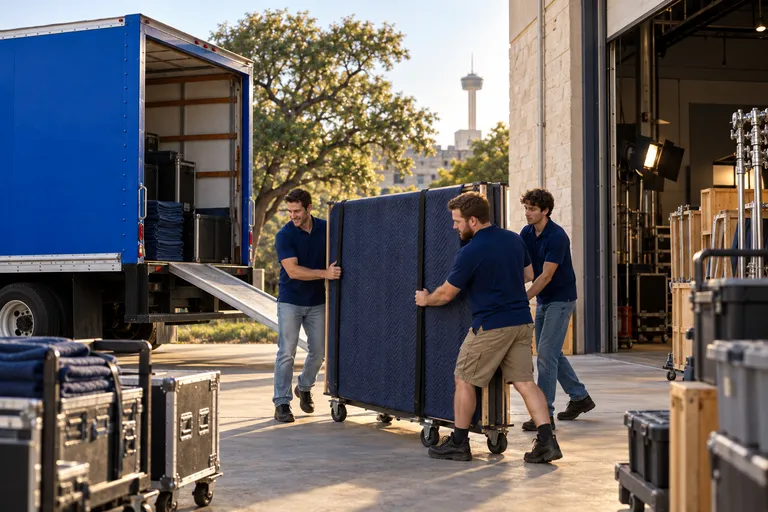
We record the placement and visible condition of reusable loose scenery with your scenic lead before it comes down. Flats travel upright with padded edges and support against flexing; trim, hinges, and braces are labeled to their section. Platforms and steps are grouped by set for the receiving crew. Your scenic team decides what can be dismantled and what stays intact.

Department staff prepare delicate fixtures, stands, and props inside cases or bins. We check that cases are closed, secure rolling carts, and keep props bins in the sequence shown on your inventory map. Your props lead packs fragile or one-of-a-kind pieces and attaches handling instructions. At delivery, we place each group in its assigned bay and leave the stage assembly path open. Lighting and grip departments unpack, mount, connect, and test their gear; we handle the released physical load.

Who does what

Some of this job belongs to other trades. The written plan names each one.

Mounted lighting, power distribution, and stage wiring
Your gaffer and licensed electrician plan the shutdown, connections, installation, and testing. We carry closed cases and loose equipment they release for the move.
Set strike, rebuild, and scenic changes
Your scenic department decides the breakdown method, supplies the set map, and rebuilds scenery. We move the released sections and their labeled hardware.
Props inventory and rented gear
Your props and production teams decide item ownership, scene references, and vendor returns. We follow their marked destination list for packed props and cases.

Not part of our work

  • Deciding which props are retained, returned, or discarded; the production and props teams reconcile that inventory.
  • Striking an active set or changing its construction without the scenic department's instructions.
  • Connecting or testing stage lighting and building power; your gaffer and licensed electrician handle those steps.

Around San Antonio and the Hill Country

Production space in San Antonio may be a converted warehouse on the near East Side or near Port San Antonio, with loading doors built for freight rather than tall flats. Hill Country productions around Boerne, Bandera, and Kerrville may keep scenery in barns reached by caliche drives and gates.

The crew that shows up

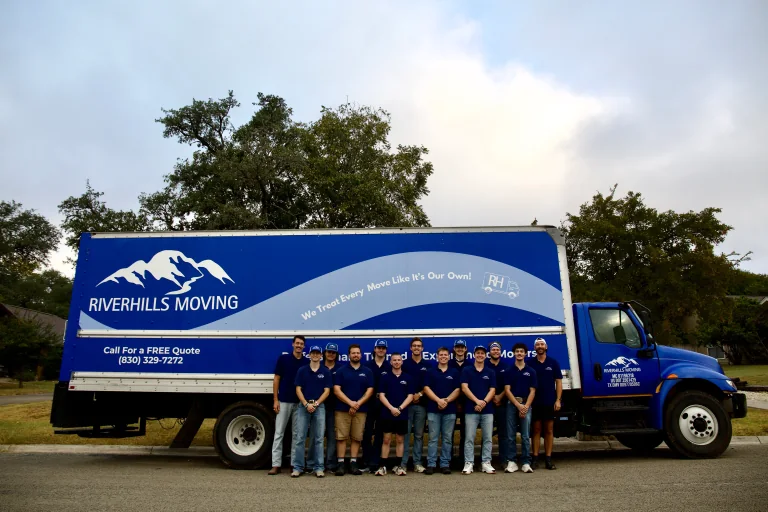
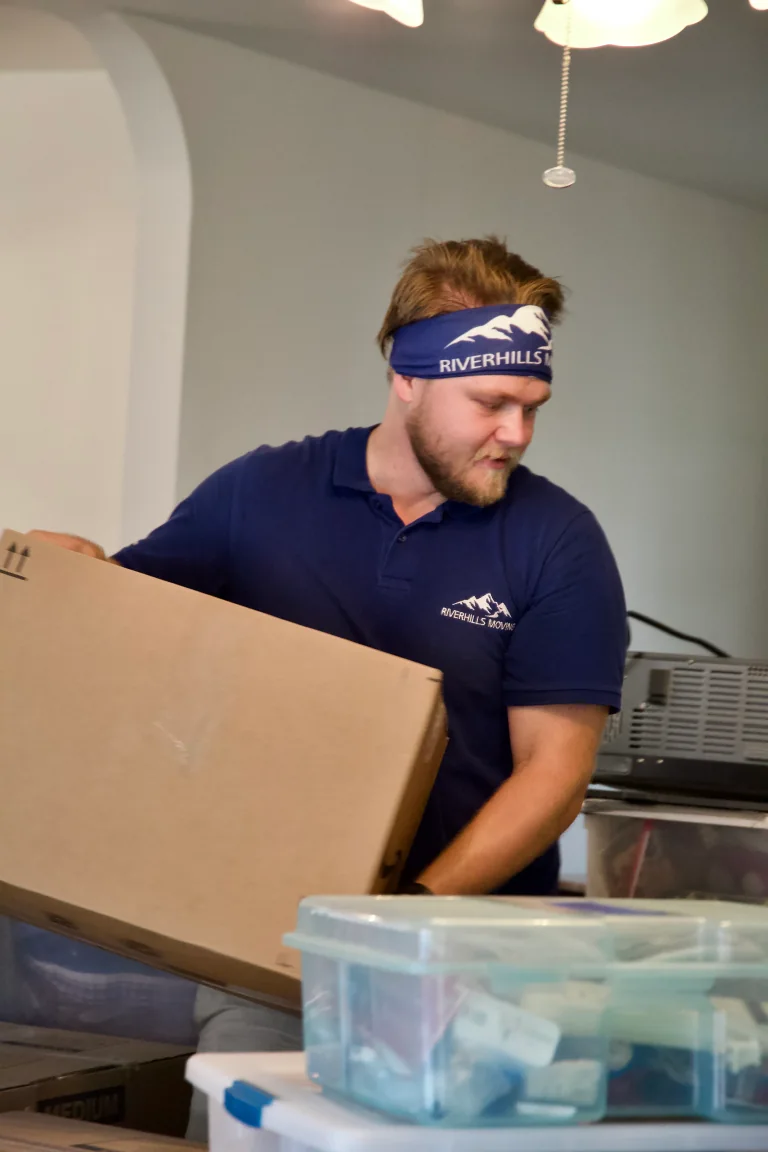
Labeled moving boxes staged for loadingRiverHills Moving crew beside the company box truckRiverHills Moving crew standing together by the truck

Film Production Studio Moving FAQs

Another question? Call (830) 329-7272.

How do we move reusable set flats without losing their wall order?

Have the scenic lead number each reusable flat against the set drawing and mark its destination stage position. We keep loose braces, trim, and fasteners with the matching section and load the flats in an order that works for both doors. At delivery, we place them by the receiving set map so your scenic team can rebuild without sorting an unlabeled stack.

Who packs the lighting and grip road cases before the studio move?

Your lighting and grip departments should pack fixtures, stands, modifiers, and small fittings in the cases they use for that gear. They also decide which cases are still needed for the final shoot. Once cases are closed and released, we move them as marked and place them in the assigned equipment bay. Your department leads unpack, connect, and test the contents.

Can prop bins stay in inventory order at the new studio?

Yes, if your props team gives each bin its current shelf or scene reference and a destination location. We can label the exterior to match that map, keep related bins together during loading, and place them at the new shelf area. Your props lead controls the contents, reconciles the inventory, and identifies any pieces that should travel separately.

What happens to scenery still needed for the final shooting day?

The production manager and scenic lead mark that scenery as unavailable until the scene is complete and strike is authorized. We can work on released storage areas or earlier sets first. After strike, the scenic lead identifies reusable sections and their hardware for the move. The load list and destination stage plan are updated before those pieces are carried out.

Plan your business move

Tell us both addresses, the building rules you know about, and the dates you cannot move. We will send back a written plan and estimate.

Call (830) 329-7272

Mon–Fri 8 AM–6 PM · Sat 9 AM–4 PM · Sun Closed

Call Now call 830-329-7272