
verified Request a move-specific estimate and review the written scope before booking.
Business & Professional Offices

Nonprofit Office Moving in San Antonio

Keep donated furnishings, volunteer work, and program supplies in their assigned lanes as your organization changes offices.

(830) 329-7272
Nonprofit Office moving in San Antonio: moving crew at work
  • Licensed & Insured USDOT 3561425 · MC-1196218
  • 5.0 ★ Rated 500+ Google Reviews
  • San Antonio & Hill Country Kerrville · Boerne · Fredericksburg

Start your free nonprofit office move quote

verified For estimate purposes only credit_card_off No credit card required

Planning a Nonprofit Office Move

A nonprofit office can look like a standard workplace until you open the program room. That room holds donated tables, outreach totes, and a stack of chairs nobody has decided about, and each one needs a yes or no before it goes on a truck. Your operations lead makes that call; our crew needs a destination for every item it loads.

We can walk the old and new rooms with your program managers and mark three paths: furnishings going into active rooms, supplies returning to program storage, and donations your organization will handle separately. Those paths guide packing and unloading, so a rolling donation intake table does not end up in the counseling room and an outreach kit does not disappear behind spare chairs. Volunteers can help your team sort, label, and prepare items before the crew arrives, under the schedule your coordinator sets. We plan the physical move and placement around that preparation.

Who usually signs off
Executive director or operations lead, with program managers approving what each room needs
Timing that works
Choose a window around distribution days, volunteer shifts, board meetings, and grant reporting; keep the supplies for the next program session accessible.

What typically moves

  • Donated desks and mismatched office chairs Your team identifies pieces to keep; we label accepted items by destination room and check the route for unusually wide desks.
  • Donation intake tables and sorting carts Freestanding intake pieces travel as their own group so the receiving area can be set up before loose supplies arrive.
  • Outreach kit totes and program supply bins Your program leads name each kit and its next use; we keep closed totes grouped by program and destination shelf.
  • Resource library shelves and printed materials Movable shelves are emptied for transport, with cartons marked by topic and the shelf position your staff chooses.
  • Community event displays and folding tables Display panels, table hardware, and folded tables stay together, marked for the event closet rather than the front office.
  • Program room worktables and mobile cabinets We protect exposed corners and label each piece for the room where staff will run that program.

Access and scheduling

Your program calendar sets the order of release. A distribution day may need its intake table and supply bins until the room closes, while board materials and staff workstations can be packed at another point. Ask about evening or weekend work after your coordinator confirms when sorting ends and the carry route opens.

Volunteer check-in and truck loading need separate space. Your coordinator assigns sorting and labeling tasks away from doorways and keeps participants out of the carry path while our crew moves large pieces. At a shared San Antonio office building, we ask for loading rules, elevator reservations, and any Certificate of Insurance before setting the schedule. If the new office has a small program storage room, we measure its doorway and agree on a shelf map before the first supply carton is loaded.

Protection and handling

Donated pieces often have different dimensions and conditions, so we inspect the items your team selects before deciding how to wrap and carry them. We pad finished edges, secure drawers, and keep loose hardware with the matching piece. Your organization decides which worn or extra furnishings stay behind; we do not turn an undecided donation pile into moving inventory.

Program supplies are packed by use and destination, with the items needed for the next session marked for accessible placement. Closed outreach totes stay grouped, and printed resources are boxed in shelf order so staff can find them. Your coordinator remains responsible for volunteer assignments and for checking that donated goods and restricted program materials have been sorted before we load them.

Who does what

Some of this job belongs to other trades. The written plan names each one.

Donation decisions, receipts, and item acceptance
Your nonprofit decides what it will keep, decline, or pass to another recipient, and its staff handles any donor acknowledgment. We move the accepted pieces you assign to the new office.
Volunteer sorting and shift assignments
Your volunteer coordinator sets tasks and work areas. Volunteers can label and prepare items under that direction; our crew carries the scheduled moving load along a clear route.
Wall-anchored shelves and building attachments
Your landlord or installer approves removal and reinstalls fixed components. We assess and move released shelf sections once they are free of the wall.

Not part of our work

  • Appraising donated furnishings, deciding whether to accept them, or issuing donor receipts; your organization makes and records those decisions.
  • Assigning or supervising volunteers; your volunteer coordinator handles shifts and keeps sorting work clear of the moving route.
  • Providing a place to hold surplus donations or program inventory; your organization identifies the destination for every item it asks us to move.

Around San Antonio and the Hill Country

A nonprofit office near downtown San Antonio may have a shared dock or elevator that needs a reserved window. Space along Loop 410 or Loop 1604 can have easier truck access but a tight interior supply room. We look at both the loading route and the program storage layout. In Boerne and Kerrville, that map also guides placement.

The crew that shows up

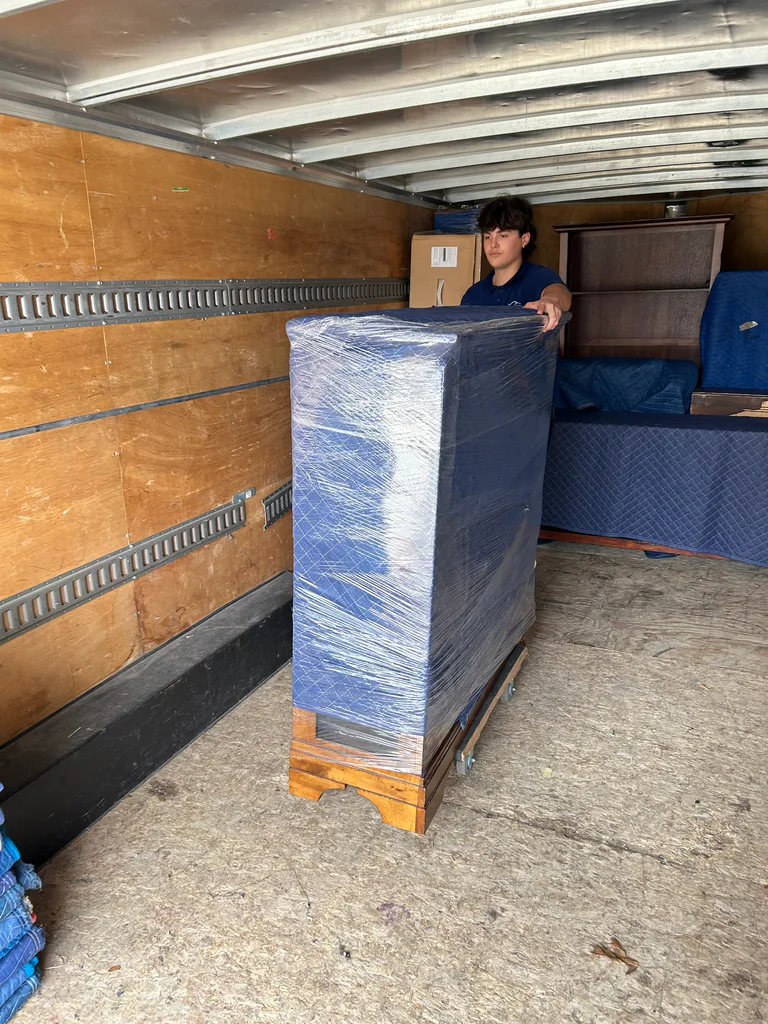
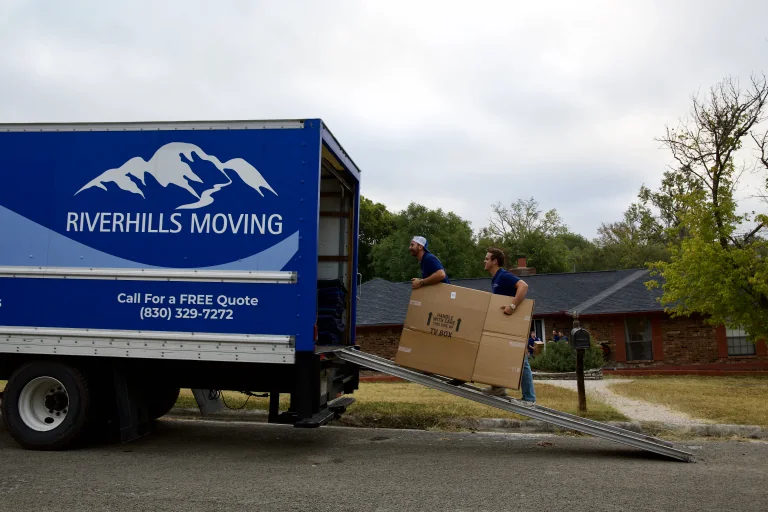
Crew shrink-wrapping furniture before loadingCrew loading the box truckCrew carrying pad-wrapped furniture to the truck

Nonprofit Office Moving FAQs

Another question? Call (830) 329-7272.

What happens to donated furniture we have not decided to keep?

Have your operations lead mark each piece as going to the new office, staying put, or awaiting another decision before loading begins. We can assess the route and move the accepted pieces you assign. Your organization handles donor records and determines where surplus items go.

Can our volunteers help prepare the office while your crew moves it?

Yes. Your volunteer coordinator can assign sorting, labeling, and kit preparation in an area away from the crew's carry route. Share the sorting schedule and a placement contact. We plan loading and large-item carries around those assignments, with your coordinator managing volunteers and our crew managing the physical move.

How do we keep program supplies available for the next session?

Ask each program lead to identify the totes, printed resources, and tables needed first at the new address. We mark those items for an accessible unloading position and keep their cartons together by program. Your staff checks the final shelf order and contents.

Will your crew set up our program storage room?

We can place movable shelves and labeled cartons in the positions shown on your room map. If shelving is attached to the wall, your landlord or installer needs to release and reinstall it; we can assess transport of the released sections.

Plan your business move

Tell us both addresses, the building rules you know about, and the dates you cannot move. We will send back a written plan and estimate.

Call (830) 329-7272

Mon–Fri 8 AM–6 PM · Sat 9 AM–4 PM · Sun Closed

Call Now call 830-329-7272