verified Request a move-specific estimate and review the written scope before booking.
Retail, Restaurant & Hospitality

Restaurant Moving in San Antonio & the Hill Country

We move dining room, bar, and packed kitchen contents while your licensed trades handle installed equipment and your licensee controls alcohol stock.

(830) 329-7272
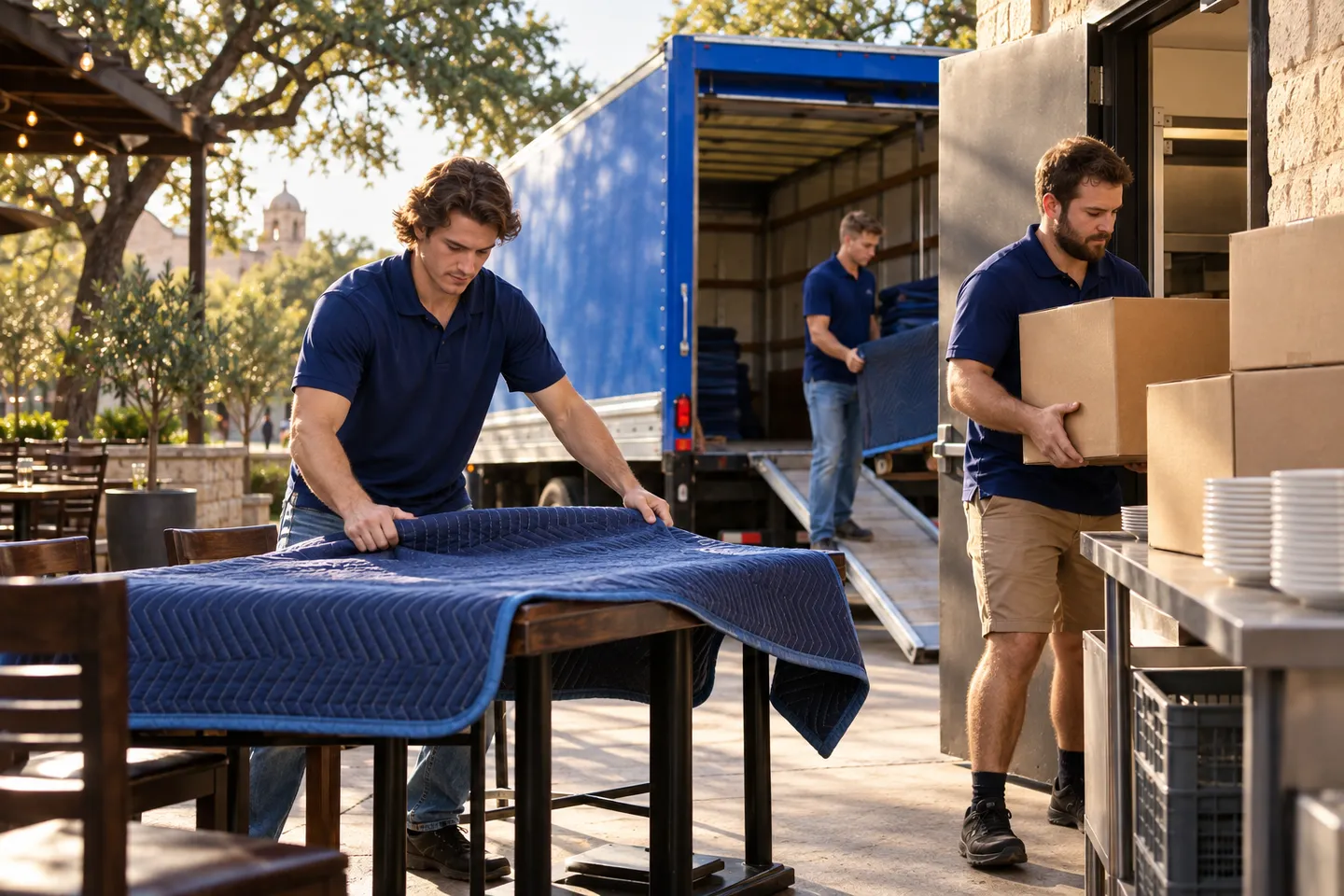
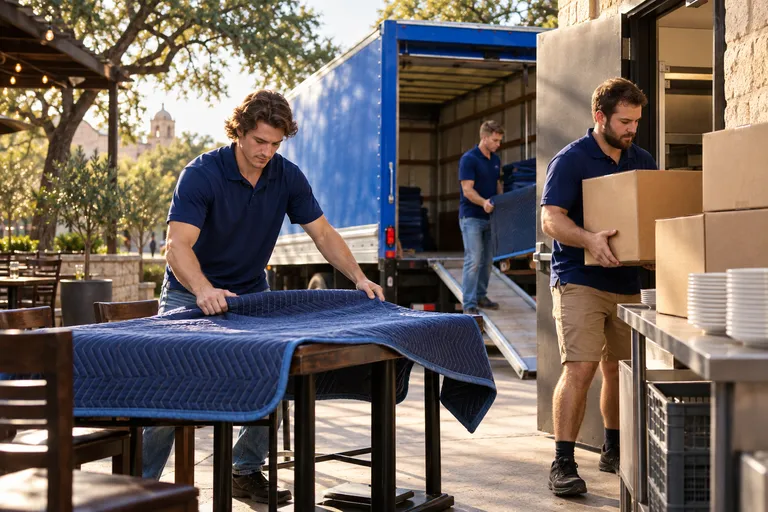
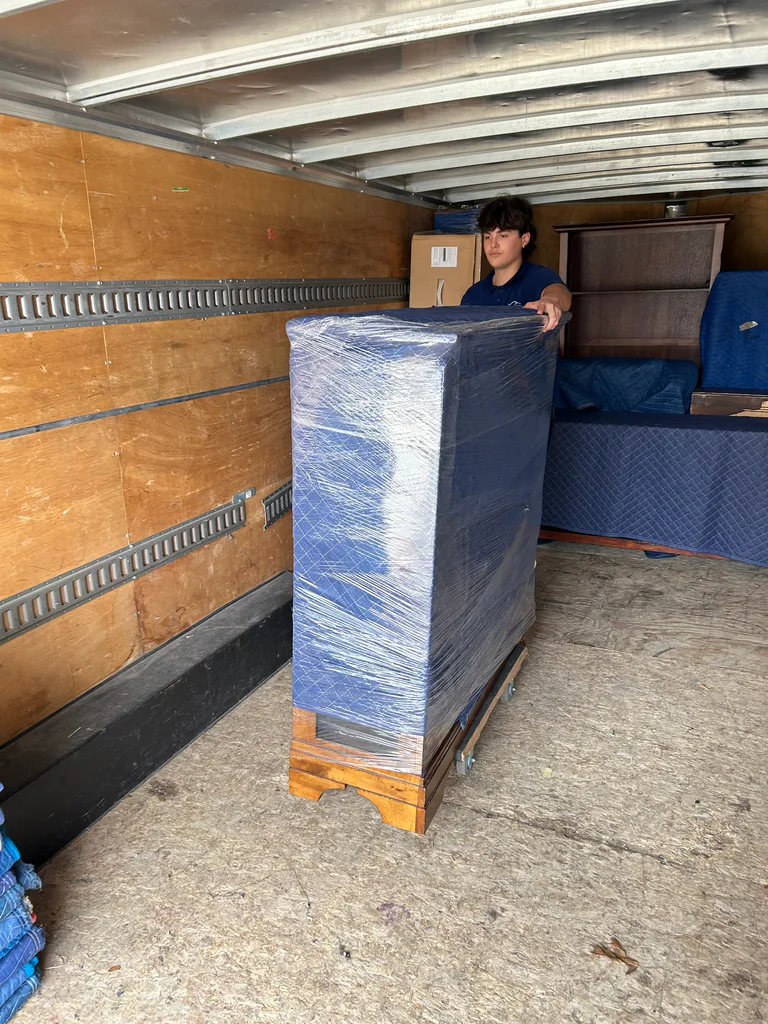
Restaurant moving in San Antonio: moving crew at work
  • Licensed & Insured USDOT 3561425 · MC-1196218
  • 5.0 ★ Rated 500+ Google Reviews
  • San Antonio & Hill Country Kerrville · Boerne · Fredericksburg

Start your free restaurant move quote

verified For estimate purposes only credit_card_off No credit card required

Planning a Restaurant Move

A restaurant relocation starts with two inventories that behave differently. Dining tables, banquettes that can be removed, host stands, bar shelving, and packed smallwares can travel with the moving crew. Cooking and cold-room systems follow the technicians who installed or service them. Before we set a loading order, you identify which pieces are freestanding, which belong to the building, and which a trade must release.

We walk the route from prep area to truck with your owner or general manager and build labels around the new floor plan: dining zone, bar position, dry goods shelf, and prep station. You decide what stock is consumed, donated, or packed before closing service. Your licensee counts and controls alcohol inventory; we plan the rest of the bar around that handoff. For a San Antonio restaurant moving toward Boerne, Kerrville, or elsewhere in the Hill Country, the same inventory and access decisions come first.

Who usually signs off
Restaurant owner or general manager, with the kitchen lead and alcohol licensee confirming their inventories
Timing that works
Plan around the last service, vendor release of kitchen equipment, and the new site's readiness; evening or weekend windows are available on request.

What typically moves

  • Dining tables and loose chairs Tables are labeled by dining zone; removable leaves and bases stay with their table.
  • Freestanding banquettes and host stands We confirm each piece is movable before padding it, then place it against the new seating plan.
  • Bar back shelving and service carts Shelves, rails, and loose fittings are labeled by bar position; glass shelves travel separately.
  • Dish racks, trays, and serviceware Packed by station so the dish area and dining service can be rebuilt without mixing sets.
  • Pots, pans, and prep smallwares Your kitchen lead sorts these by station; we pack and label the movable contents.
  • Dry goods shelving and sealed stock Freestanding shelves are emptied and marked by bay; your team decides which food stock travels.

Access and scheduling

Your final service time is only one part of the move date. The kitchen lead needs a clear packing window, the trades need access to installed equipment, and the new site needs room for staged dining pieces before staff reset the floor. We can discuss an evening or weekend move, but first we map the order in which the old space can be emptied and the new one can receive items.

Ask the landlord at both addresses where a truck may stand, whether a rear entrance is shared with other tenants, and when carts may cross public areas. We check door widths, turns near the dish area, and any elevator or dock reservation. If a building asks for a Certificate of Insurance, we collect its wording before scheduling. Your manager confirms the new seating plan.
Protection and handling

Restaurant loads mix hard edges, fragile serviceware, and pieces that collect grease. We ask your team to clean and empty movable pieces before packing. Our crew pads table tops and chair frames, protects exposed corners on freestanding cabinets, and separates glass shelves from their brackets.

Smallwares are grouped by station, with a label for the shelf or work area they should return to. Loose hardware from a removable bar shelf or table base stays with that piece. We keep the receiving floor plan at the unload point and place each dining group before cartons fill the room. Equipment that remains installed stays outside this handling sequence until its own vendor makes a separate plan. The restaurant's licensee keeps the alcohol count and directs its transfer; our load plan leaves that stock out of the general bar cartons.

Who does what

Some of this job belongs to other trades. The written plan names each one.

Cooking equipment and kitchen utility connections
Your licensed trade disconnects gas, water, and electrical connections, makes any required caps, and handles reconnection at the new site. We plan around its release of movable equipment.
Refrigeration systems and walk-in units
Your refrigeration contractor handles refrigerant lines and any service work. Walk-ins are installed structures; their contractor assesses the old and new sites rather than treating the enclosure as a moving item.
Alcohol stock and permits
The restaurant's licensee inventories, controls, and directs the transfer of alcohol stock and handles any permit questions. We move the empty bar fixtures assigned to our load.

Not part of our work

  • Disconnecting or reconnecting gas, water, refrigerant, or hard-wired equipment; those tasks belong to the appropriate licensed trade.
  • Moving a walk-in cooler or freezer as a complete unit; its installed enclosure and system require a contractor's plan.
  • Counting, packing, or transporting alcohol inventory as part of the general restaurant load; the licensee directs that stock.

Around San Antonio and the Hill Country

A dining room near the Pearl or downtown may share a service lane with neighboring businesses, while a restaurant off Loop 1604 may have a rear parking area with a longer carry into the kitchen. We use the actual doors, parking rules, and seating plan for each address when arranging the load.

The crew that shows up

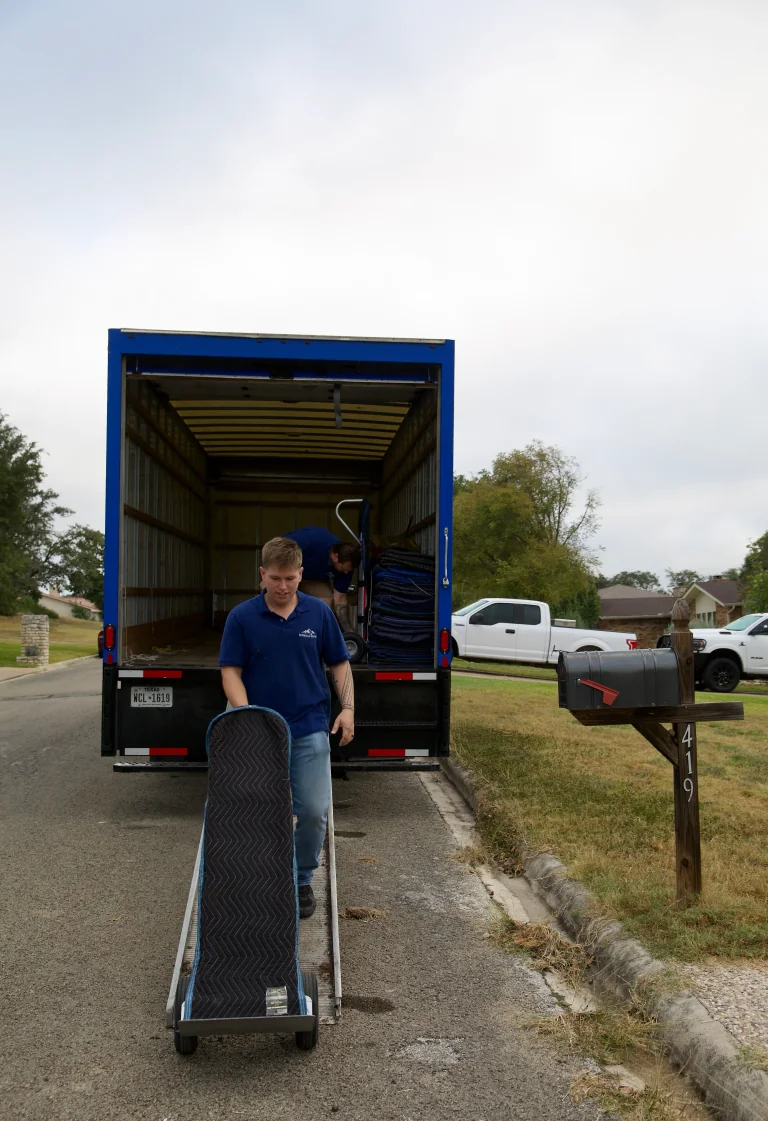
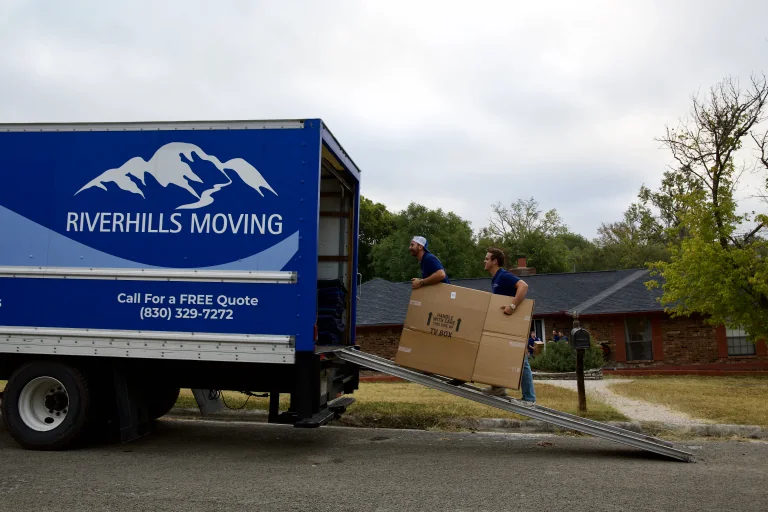
Crew loading the box truckCrew carrying pad-wrapped furniture to the truckLoaded hand dolly at the truck ramp

Restaurant Moving FAQs

Another question? Call (830) 329-7272.

Does a walk-in cooler move with the restaurant's other equipment?

Treat the walk-in as an installed system. Have its refrigeration contractor assess what can be reused at the new address and what work the old site requires. Our restaurant load covers movable dining pieces, bar fixtures, and packed smallwares. If the contractor identifies separate freestanding items for transport, we can review those items after they are released.

Who handles the range and other connected cooking equipment?

Book the appropriate licensed trade to isolate and release connected equipment, then to set up and test what will be used at the new site. Give us the trade's schedule and an item list before we set the truck order. We can review movable units after release; the trade decides what needs specialist handling or stays with the building.

Can you keep our prep stations and dish service sorted during the move?

Yes. Your kitchen lead can assign a name to each prep, dish, and service area before packing begins. We mark cartons and movable shelving to match those destinations, and keep loose fittings with their parent piece. At unload, the new floor plan tells us where each group lands, while your staff decides how ingredients and tools return to use.

What happens to the bar's alcohol bottles during relocation?

Your alcohol licensee should decide how the stock is counted, controlled, and transferred under the permits that apply to the business. Keep those bottles separate from the bar cartons assigned to us. We can move empty back-bar shelving, service carts, and packed nonalcoholic bar tools, then place them where the licensee wants the stock area rebuilt.

Plan your business move

Tell us both addresses, the building rules you know about, and the dates you cannot move. We will send back a written plan and estimate.

Call (830) 329-7272

Mon–Fri 8 AM–6 PM · Sat 9 AM–4 PM · Sun Closed

Call Now call 830-329-7272