
verified Request a move-specific estimate and review the written scope before booking.
Warehouse & Light Industrial

Records Storage Moving in San Antonio

Count closed archive boxes by shelf section, carry their sequence labels through the move, and stage them for the receiving shelves.

(830) 329-7272
Records Storage moving in San Antonio: moving crew at work
  • Licensed & Insured USDOT 3561425 · MC-1196218
  • 5.0 ★ Rated 500+ Google Reviews
  • San Antonio & Hill Country Kerrville · Boerne · Fredericksburg

Start your free records storage move quote

verified For estimate purposes only credit_card_off No credit card required

Planning a Records Storage Move

Every shelf section in an archive has a count, and that count is what the move has to protect. A wall of matching archive cartons can look complete at delivery while one missing sequence leaves a retrieval request difficult to fill. Your records manager supplies the shelf map, identifies the boxes that will move, and confirms the count for each section before it is released. We turn that map into a load order that keeps neighboring sequences together.

Each closed box gets an outside reference for its old shelf position and its intended new position. The label identifies a location, rather than describing the documents inside. Our crew can move the released boxes and freestanding shelving, then stage each group beside its receiving bay. Your staff checks the box count and returns cartons to shelves in the order its catalog requires. If the receiving shelves are still being assembled, we need a marked floor position for every group so the sequence remains readable while it waits.

Who usually signs off
Records storage manager or archive supervisor, with a facilities contact approving the shelf layout and building access
Timing that works
Schedule around your archive's request and return cycle; the records manager chooses when each shelf section can be unavailable for retrieval.

What typically moves

  • Closed archive cartons Counted by source shelf section and marked with a destination bay and sequence position; contents remain under your staff's direction.
  • Oversize document cartons Kept distinct from standard archive cartons so the receiving shelf plan allows for their larger footprint.
  • Freestanding archive shelves Uprights and shelves are tagged by bay, with loose clips bagged to the unit they fit.
  • Mobile archive carts Cart positions are assigned to a shelf group; loose cartons are counted separately before a cart rolls out.
  • Retrieval desk and return bins Movable desk pieces and empty return bins arrive at the position your archive team marks for incoming requests.
  • Index binders and shelf maps Your manager chooses which working copies travel with staff; approved move copies can be boxed for the new retrieval desk.

Access and scheduling

Your retrieval schedule determines which shelves can be cleared. The archive manager marks active request boxes before a section is released and decides whether those boxes remain available at the old address or travel with staff. We set a separate count for each released section, so a late return does not get quietly added to an already counted load. Name the person who can pause retrieval requests.

At the origin and destination, we need aisle widths, shelf heights, door clearances, cart routes, and a place to stage closed boxes without covering labels. A managed San Antonio building may require a loading reservation, freight elevator window, and Certificate of Insurance. Your facilities contact confirms those rules and the receiving shelf layout before loading.
Protection and handling

Box condition matters when cartons have been stacked or handled for years. We check for weak bottoms, crushed corners, and labels that may peel before a shelf group is moved. Your archive staff decides whether a worn carton should be reboxed and supplies its correct reference. We can pack it under their direction, keeping the same outside sequence code. Closed boxes travel upright, with heavier cartons low in the load and section labels visible for checking.

We compare the number of labeled boxes in a released section with the move list as the section leaves and again when it reaches its marked receiving position. A mismatch or unreadable code goes back to your archive manager for a decision before that group is shelved. Shelf pieces are wrapped and kept with their bay hardware; clear walk paths and protected corners help prevent a cart from catching a box edge.

Who does what

Some of this job belongs to other trades. The written plan names each one.

Archive catalog and box selection
Your records manager identifies the cartons to move, supplies location codes, resolves count exceptions, and updates retrieval locations. We move the released, labeled handling units.
Anchored or specialized shelving
Your shelving installer removes, sets, and anchors those systems. We coordinate box staging around the installer and handle agreed freestanding shelf units.
Records designated for destruction
Your organization makes the retention decision and arranges its document destruction vendor. That vendor collects the designated material separately from the move.

Not part of our work

  • Reading records, assigning retention dates, or changing the archive catalog; your organization controls those decisions.
  • Dismantling or anchoring fixed shelving; your shelving installer performs that work.
  • Collecting or destroying cartons designated for disposal; your appointed document destruction vendor handles them.

Around San Antonio and the Hill Country

Records rooms in San Antonio range from basement storage in downtown towers to back rooms in Northwest Side office parks, and downtown buildings may cap freight elevator time. Heat and humidity in a parked truck are hard on aged cartons, so between May and September the weakest boxes load last and come off first. Hill Country receiving rooms may mean a longer carry from parking.

The crew that shows up

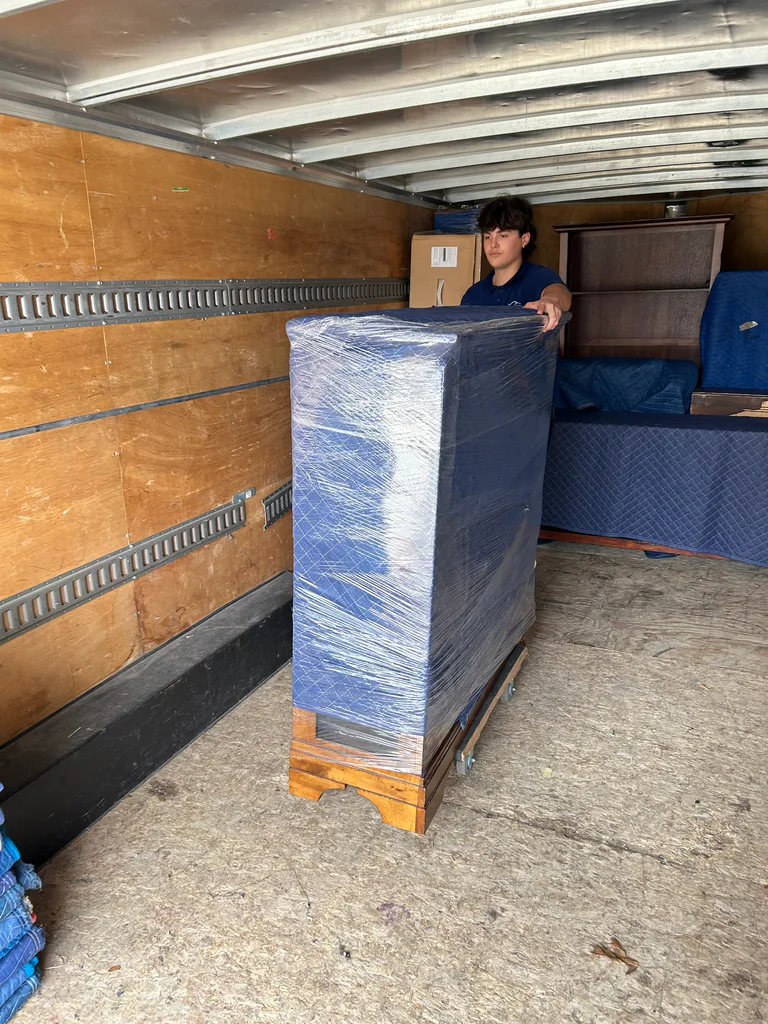
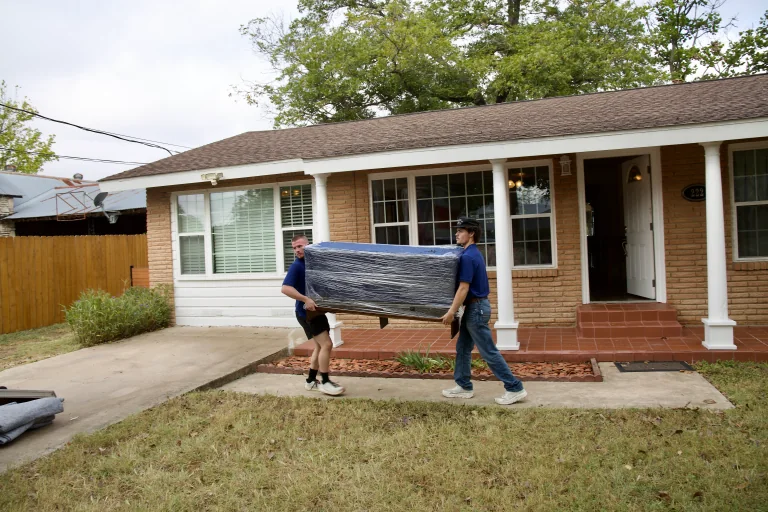
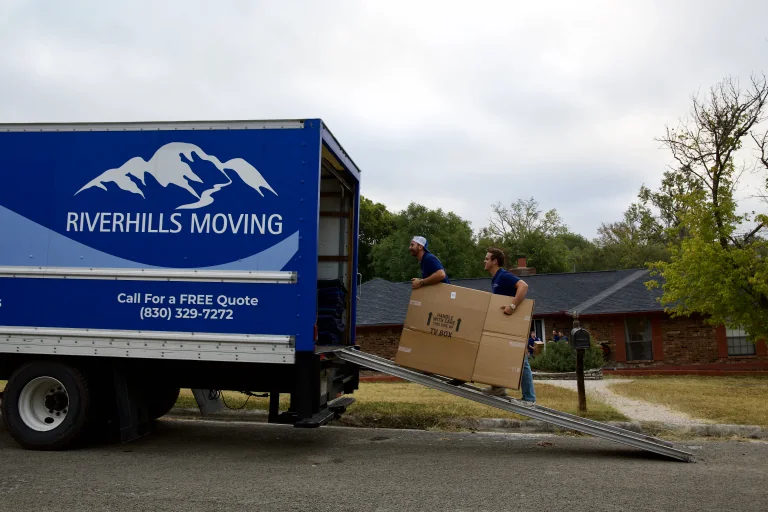
Crew shrink-wrapping furniture before loadingCrew loading the box truckCrew carrying pad-wrapped furniture to the truck

Records Storage Moving FAQs

Another question? Call (830) 329-7272.

How should we count archive boxes before a shelf section is released?

Have your archive manager record the number of closed cartons on each source shelf section and identify any box already out for retrieval. Give that section one code and a destination bay. We can compare the cartons presented for loading with that section count, then check the same number at delivery. Your team resolves an outstanding request or count difference before approving shelf placement.

What belongs on a sequence label for a records storage move?

Use a source section, a position within that section, and the destination bay or shelf position your manager assigns. Put the location code where it stays visible on a closed carton. You can keep names, account details, and document descriptions in your own catalog. We use the outside codes to group cartons and set them down in the planned order.

Can retrieval requests continue while the archive shelves are being moved?

Your records manager can hold active request boxes aside and release the remaining shelf sections in stages. Tell us which section is available to carry and which must stay reachable. We keep each released group's count separate during loading and placement. Your team decides when a request changes to the new location and updates its catalog after checking the delivered boxes.

Where do cartons go if their destination shelving is still being installed?

Mark a floor location for each destination bay before the boxes leave the old space. We can stage closed cartons there by sequence, with the outside references facing the aisle for your count. Your shelving installer finishes its separate work, and your archive staff directs the final placement. Make sure the temporary locations leave a clear route for carts and retrieval work.

Plan your business move

Tell us both addresses, the building rules you know about, and the dates you cannot move. We will send back a written plan and estimate.

Call (830) 329-7272

Mon–Fri 8 AM–6 PM · Sat 9 AM–4 PM · Sun Closed

Call Now call 830-329-7272