verified Request a move-specific estimate and review the written scope before booking.
Education, Civic & Community

Museum and Gallery Moving in San Antonio

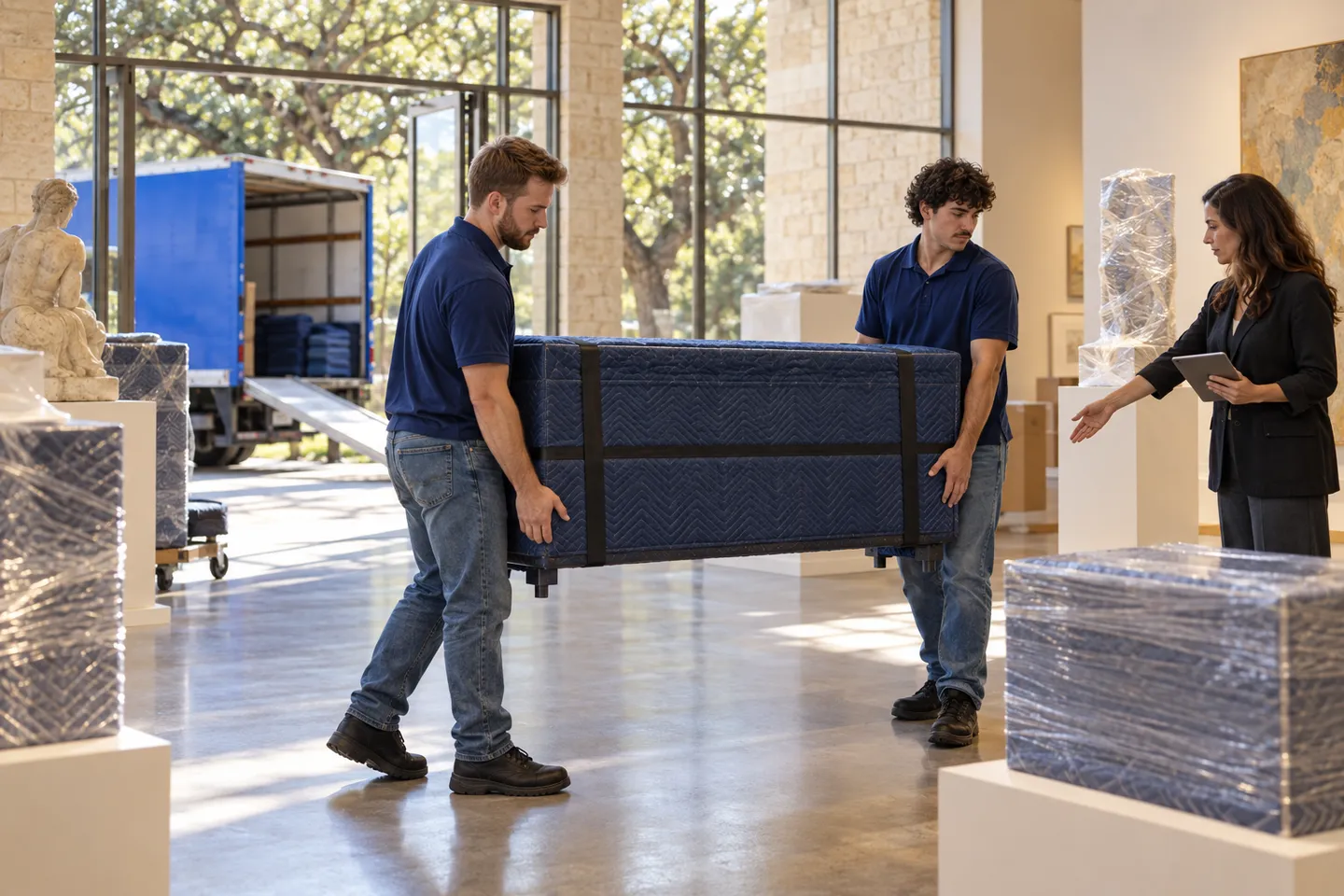
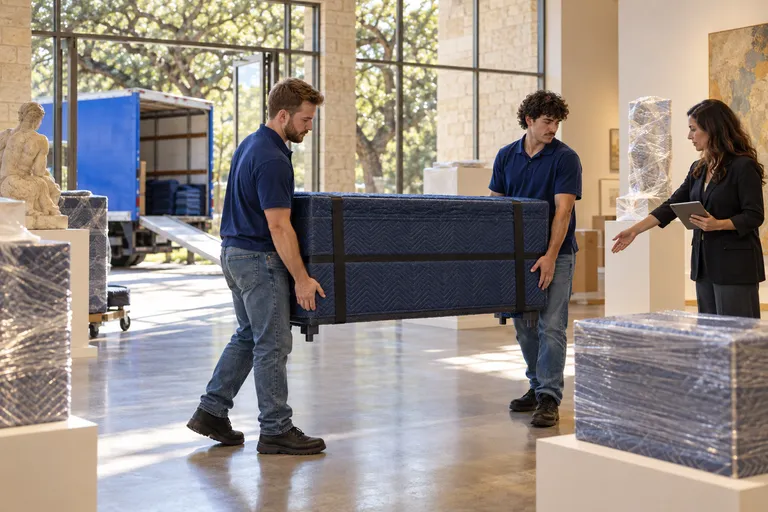
Your curator sets the handling instructions for each work; we plan the carry, crating, and case placement around the exhibition schedule.

(830) 329-7272
Museum & Gallery moving in San Antonio: moving crew at work
  • Licensed & Insured USDOT 3561425 · MC-1196218
  • 5.0 ★ Rated 500+ Google Reviews
  • San Antonio & Hill Country Kerrville · Boerne · Fredericksburg

Start your free museum & gallery move quote

verified For estimate purposes only credit_card_off No credit card required

Planning a Museum & Gallery Move

In a gallery, the person who knows how each object travels is your curator, and the move plan is written in that person's terms. Wall art may need a specified wrap or crate. An empty case travels separately from its glass and objects. Your curator or registrar identifies each work, gives the handling instructions, and decides when it may leave the gallery. We build the moving scope from that release plan.

For pieces selected for crates, we can plan through our crating service using the dimensions and packing direction your curator supplies. The same walk-through covers plinths, display panels, empty cases, collection drawers, and the back-of-house materials that make the next installation possible. We label movable fixtures by destination gallery and position so the receiving team can place them before the art arrives. Your team manages lender and artist approvals; we carry released items. Cases and plinths go first, art last, and nothing on the curator's hold list goes on the truck until it is released.

Who usually signs off
Museum registrar, gallery director, or exhibitions manager who approves the object list and move plan
Timing that works
Deinstallation and the next installation set the window; coordinate visitor hours, lender pickups, and building access before requesting evening or weekend work.

What typically moves

  • Freestanding exhibit cases and vitrines Empty cases are measured for doors and lifts; removable glazing and delicate internal fittings follow the case maker's instructions.
  • Gallery plinths and sculpture pedestals Each base carries its installation location, with finish surfaces wrapped before loading.
  • Modular exhibit walls and display panels Loose panels travel with their connectors and a destination position from the exhibition plan.
  • Framed works released for transport The curator specifies the wrap or crate and identifies which frames the crew may carry.
  • Archival flat files and collection drawers Your staff prepares and closes contents; drawers and cabinets are labeled by collection room.
  • Object mounts, risers, and label holders Small display parts are grouped by exhibit section so installers can find the right hardware.
  • Gallery preparation tables and supply cabinets Movable workroom pieces are emptied, wrapped, and placed where installation staff need them.

Access and scheduling

A gallery may stay open while an outgoing exhibit is taken down, so your exhibitions lead sets the last visitor period and releases spaces in sequence. We ask for the deinstallation plan, the receiving floor plan, and a list of works that cannot share a loading window with general fixtures. Your staff schedules artist and lender pickups outside our load list. Ask about evening or weekend work around public hours.

Loading conditions often decide the order of work. We check the clear opening of gallery doors, the path from each case to the loading area, and whether a freight elevator or dock reservation is required. The building may ask for a Certificate of Insurance and a protected carry route through public areas. At arrival, we place cases and plinths from the curator's map before art installation begins.

Protection and handling

We measure empty cases and check their travel path with your exhibitions lead. Pads and edge protection go on case frames and finished plinths; small mounts and fittings are packed by exhibit section. The case maker or display contractor directs glass removal. Panels travel separately from their labeled base.

Art receives an individual decision. Your curator specifies what may be wrapped, what needs a crate, its orientation, and who may release it. We can measure and prepare approved pieces for crating on request, then carry them according to those written directions. When a conservator packs a work, we carry it after release. At arrival, the crew places closed crates and wrapped works in the designated receiving area; your team opens, examines, and installs the art. This keeps installation judgments with the people responsible for the collection.

Who does what

Some of this job belongs to other trades. The written plan names each one.

Artwork packing method, release, and installation
Your curator or registrar approves the object list and handling directions. A conservator or art preparator packs any work assigned to them; our crew moves released pieces under those directions.
Removable case glazing and built-in exhibit lighting
Your case maker or display contractor gives the glazing removal and packing method. A licensed electrician handles any hard-wired lighting; we move the released case components.

Not part of our work

  • Judging an artwork's condition, choosing treatment, or approving a packing method for a loaned piece; those decisions stay with the curator, lender, or conservator.
  • Opening crates, mounting objects, and installing art in cases or on walls; your exhibitions team or appointed installer handles display placement.

Around San Antonio and the Hill Country

Near the Pearl or downtown San Antonio, shared loading space shapes the carry route. Ask management about truck access and case clearance. In Boerne, Kerrville, and Fredericksburg, gallery storefronts may have a shorter route to the street but less staging room inside. We use the actual door and case measurements to plan either setting.

The crew that shows up

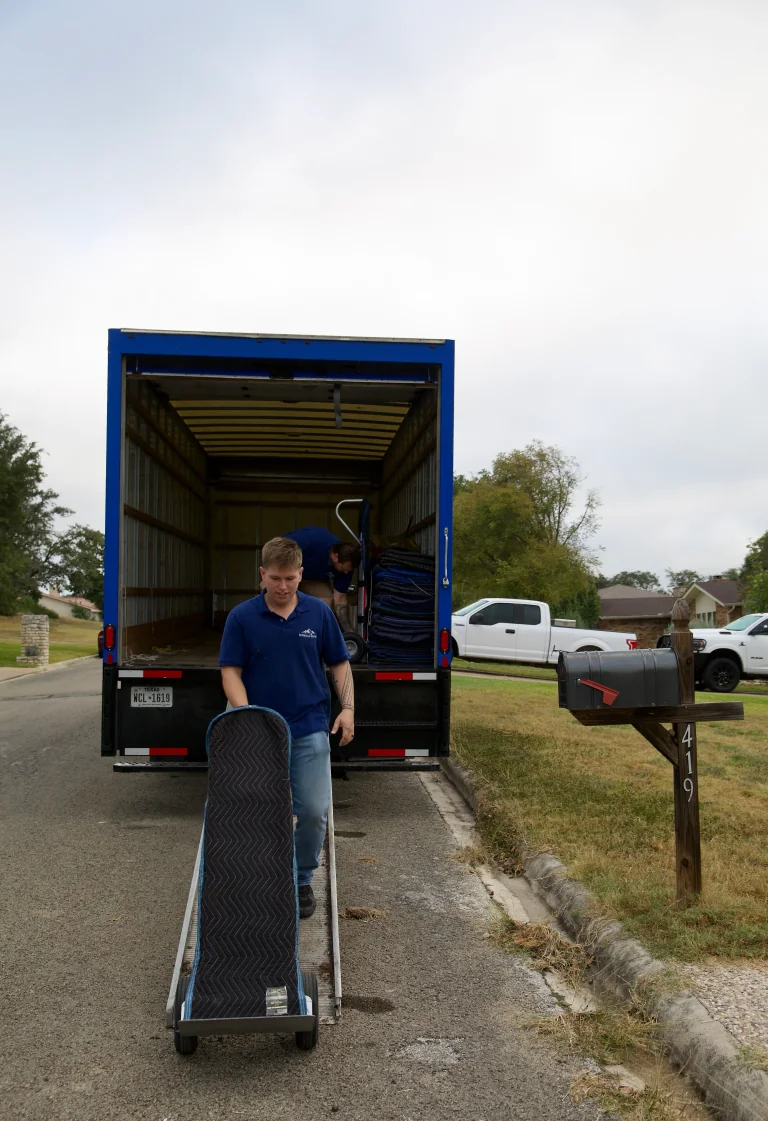
Loaded hand dolly at the truck rampRiverHills Moving crew member at workLabeled moving boxes staged for loading

Museum & Gallery Moving FAQs

Another question? Call (830) 329-7272.

Who decides whether a painting goes in a crate for the gallery move?

Your curator or registrar makes that call, especially when an artist or lender has provided packing directions. Give us the object list, dimensions, required orientation, and any approved crate specifications. We can plan the crate through our crating service and carry the released piece as directed. A conservator or preparator should handle packing when your collection plan assigns that work to them.

Can the empty exhibit cases arrive before the artwork?

Yes, if your installation plan calls for the cases and plinths to be placed first. We label each movable case with its destination position and plan a separate arrival order for wrapped works and crates. Your team can then check case placement and prepare the display area before releasing art for delivery. Confirm door clearances and any glazing removal before the case load is scheduled.

What happens to a vitrine with removable glass and interior lights?

We ask the case maker or your display contractor how its glazing comes out and how each panel should travel. If the lights connect to building wiring, your electrician releases and reinstalls that connection. Our crew can pad and move the empty case components after those steps are complete. The curator keeps the displayed objects separate from the case load.

How should we mark objects returning to lenders during the move?

Keep lender returns on a separate list from items going to the new gallery. Your registrar sets each return appointment and packing direction, and identifies which objects are outside our scope. We use your destination labels for the pieces released to our crew and keep them apart from cases and preparation supplies. That gives your staff a clear handoff at both doors.

Plan your business move

Tell us both addresses, the building rules you know about, and the dates you cannot move. We will send back a written plan and estimate.

Call (830) 329-7272

Mon–Fri 8 AM–6 PM · Sat 9 AM–4 PM · Sun Closed

Call Now call 830-329-7272